Showing posts with label COINS. Show all posts

Thursday, 7 May 2026

ΒΑΣΙΛΕΩΣ ΑΛΕΞΑΝΔΡΟΥ — “OF KING ALEXANDER”


ΒΑΣΙΛΕΩΣ ΑΛΕΞΑΝΔΡΟΥ ~ VASILEOS ALEXANDROU ~“OF KING ALEXANDER”

The inscription ΒΑΣΙΛΕΩΣ ΑΛΕΞΑΝΔΡΟΥ, meaning “of King Alexander,” is one of the most iconic marks of ancient Greek coinage from the Hellenistic period. These coins were minted during and after the reign of Alexander the Great, whose conquests reshaped the known world.

Typically found on silver tetradrachms and other denominations, the inscription often accompanies the image of Heracles — symbolizing strength and divine lineage — or Zeus, representing kingship and authority.

Circulating from Greece to India, these coins became the standard of trade and trust, their consistent weight and design ensuring use long after Alexander’s death.

Today, they endure as glittering relics of empire, offering historians and collectors a direct connection to the era of Hellenistic expansion, unity, and cultural exchange.


Source ~ The archaeologist official

Tuesday, 3 March 2026

THE SEA EAGLE OF SINOPE ~~ THE ETERNAL SYMBOL OF PONTUS


Hemidrachm of the  Greek city of Sinope,  circa 330-250 BCE.

In ancient Greek Religion, Sinope is a Nymph who was associated with the region of Paphlagonia, located on the southern coast of the Black Sea (modern-day turkey). Sinope is believed to have been the daughter of Asopos, a river god, and Metope. There are variations in Sinope's story,  but a common version involves her being pursued by the God Apollo. 

In order to escape His advances, she fled to the sea and prayed to the Gods to be transformed into a seal. Her plea was granted, and she became a seal, finding refuge in the Black Sea. The city of Sinope, also located in Paphlagonia, was said to be founded by Autolycus, the son of Hermes, and it was named after the Nymph Sinope. This city grew to become a significant Greek colony known for its trade, culture, and history.


The image of the sea eagle looking left later became the symbol on the flag of the Greeks of Pontus. 


Thursday, 1 January 2026

ALEXANDER THE GREAT COIN ~ SAUDI ARABIA


Eastern Arabia. Gerrha. 230-220 BCE.

The makers of this coin were mitating the coin types of Alexander the Great . Head of young Herakles , wearing lion skin / Shams seated l. on throne holding eagle and scepter, ΣΒΥ (Shams )in South Arabian script, and  Greek script ΑΛΕΞΑΝΔΡΟΥ   (of king  Alexander ).

This rare tetradrachm is one of the earliest Arabian coin issues struck by the caravan city of Gerrha in what is now Saudi Arabia. Exposure of the rulers and people of Gerrha to the international trade coinage of Alexander the Great led to the adoption and reinterpretation of his Herakles and Zeus types for themselves. Here, the God on the reverse is clean shaven and youthful, reflecting contemporary Arab fashion rather than Greek tradition, and is clearly identified by the South Arabian legend as the Arab god Shams, rather than Greek Zeus. Shams was a sun god derived from the Mesopotamian god Shamash. In Eastern Arabia Shams was regularly understood as a young male deity, following old Mesopotamian custom, while in the south Shams was understood to be female. The tetradrachm reflects the multicultural character of Arabia in the third century BCE, standing as it did at the crossroads of the Seleucid Empire that succeeded the vast Macedonian Empire of Alexander the Great and Mesopotamia, whose civilization was already very old when Alexander arrived, as well as the ability and willingness of the ancient Arabs to adapt features of these foreign cultures for their own use. Even the inscription naming Shams is borrowed in that it is a South Arabian script used by Eastern Arabs who more commonly wrote in Aramaic. As such, the use of this script as well as the reinterpretation of Zeus as Shams places a strongly Arab stamp onto an otherwise ubiquitous Greek coin type. 

Sunday, 10 August 2025

COINS FROM ALL OF THE CORE GRECO- BACTRIAN RULERS


In the picture we see coins from all of the core Greco-Baktrian rulers.

The Greco-Bactrian Kingdom was a Greek state of the Hellenistic period located in Central Asia. Although a Greek population was already present in Bactria by the 5th century BCE, Alexander the Great conquered the region by 327 BCE.

Wednesday, 9 April 2025

DIODOTUS II THEOS GREEK KING OF BACTRIA


 Diodotus II Theos (Greek: Διόδοτος Θεός, Diódotos Theós; died c. 225 BCE) was the son and successor of Diodotus I Soter, who rebelled against the Seleucid empire, establishing the Graeco-Bactrian Kingdom. Diodotus II probably ruled alongside his father as co-regent, before succeeding him as sole king around 235 BCE. He prevented Seleucid efforts to reincorporate Bactria back into the empire, by allying with the Parthians against them. He was murdered around 225 BCE by the usurper Euthydemus I, who succeeded him as king.


Diodotus’ career was recounted by Apollodorus of Artemita in the Parthian History, but this text is lost, and surviving literary sources only mention him in passing. Thus, most details of Diodotus' life and career have to be reconstructed from numismatics.

The Seleucid empire gained control of Bactria and the surrounding regions between 308 and 305 BCE and made it a satrapy (province) of their empire. Diodotus' father, Diodotus I ruled the region of Bactria as a satrap (governor) some time in the 260s BCE and gradually drifted into independence during the reign of the Seleucid king Antiochus II Theos (261-246 BCE). The process culminated in Diodotus I's proclamation of himself as king sometime between 255 and 245 BCE.


Coinage minted under Diodotus I derives from two separate mints. The coinage of one mint features a mature man on the obverse—generally identified as Diodotus I, while the obverse of coinage produced at the other mint depicts a similar, but younger, figure. Frank L. Holt proposes that the latter was Diodotus II. He suggests that Diodotus was entrusted with control of a portion of the realm that included the second mint. This arrangement would follow the model laid down by the Seleucids, who had made a practice of appointing the crown prince as co-regent and entrusting them with government of the eastern portion of the empire (including Bactria). The location of the region under Diodotus II's control is unknown; Holt tentatively suggests that he controlled the western region which was exposed to raids from Parthia and had his base at Bactra.

During his reign, Diodotus I had expelled the Parni king Arsaces I from Bactria. Arsaces had gone on to seize the region of Parthia from the Seleucids and carved out his own kingdom in what is now northeastern Iran. Diodotus I remained opposed to the Parni and thus aligned with the Seleucids. On his accession, Diodotus II reversed his father's policy:

Soon after, relieved by the death of Diodotus [I], Arsaces made peace and concluded an alliance with his son, also by the name of Diodotus; some time later he fought against Seleucus [II] who came to punish the rebels, but he prevailed: the Parthians celebrated this day as the one that marked the beginning of their freedom.

— Justin, 41.4

This battle between Seleucus II and Arsaces took place around 228 BCE. It is unclear whether Diodotus was actively involved in the battle or simply agreed to remain neutral, thereby leaving Arsaces free to bring all his forces to bear on the invading Seleucid army.


Sometime after this, around 225 BCE, Diodotus was killed by Euthydemus I, who usurped the throne and founded the Euthydemid dynasty. W. W. Tarn proposed that Diodotus I had married a Seleucid princess as a second wife and had a daughter who was married to Euthydemus, making him Diodotus II's brother-in-law. There is, however, no evidence for the existence of either of these women and the theory no longer enjoys credence with contemporary scholars. Archaeological evidence reveals that the city of Ai-Khanoum was besieged around 225 BCE, an event which Holt connects with Euthydemus' seizure of power. It seems therefore that there was a period of civil war, culminating in Euthydemus' victory—a reconstruction that seems to be confirmed by numismatic evidence.


Most scholars have treated the alliance with Arsaces as a response to the threat from Seleucus II. Tarn suggested that Euthydemus I's usurpation was a reaction to the alliance. Frank Holt proposes the opposite: that the alliance with Arsaces was a response to the outbreak of civil war with Euthydemus.

Diodotus II largely continued the minting patterns laid down by his father. There were two mints, which issued gold, silver and bronze coinage. The precious metal coinage consisted of gold staters and silver tetradrachms, drachms, and hemidrachms on the Attic weight standard. These coins have the head of a male figure on the obverse shown wearing the diadem—a band of cloth wrapped around the head, with two strips hanging down the back, which had been the standard symbol of Hellenistic kingship since the time of Alexander the Great. The reverse of these coins depicted Zeus preparing to throw His thunderbolt. As mentioned above, during Diodotus I's reign, two different figures appeared on the obverses—an older figure ('series A') and a younger figure ('series C & E'), who are identified with Diodotus I and Diodotus II respectively. Series A and C probably minted at Ai-Khanoum or at Bactra, while Series E was minted at a second mint, which Frank Holt tentatively identifies with Bactra.This mint produced coinage in a smaller quantity and at a lower quality than that of the Ai-Khanoum/Bactra mint. He proposes that the small series C was minted at the main mint in order to establish Diodotus II's position as heir apparent of the whole Kingdom.


After a break, both mints produce coins with the younger portrait and with the legend now Ancient Greek: Βασιλεωσ Διοδοτου ('Of Diodotus', 'series D & F'), whereas the legend on the earlier coins was Ancient Greek: ΒΑΣΙΛΕΩΣ ΑΝΤΙΟΧΟΥ ('Of King Antiochus'). Holt suggests that this break marks the death of Diodotus I and accession of Diodotus II. This shift in legends seems to reflect the final renunciation of Seleucid authority and a full proclamation of Bactrian independence.


For the majority of his reign, Diodotus II issued coinage on a relatively modest scale. Towards the end of his reign, he began to mint on a much larger scale, with greater quantities of gold coinage than previously. This was accompanied by the production of an issue at the secondary mint, depicting the older figure of Diodotus I once more, but in a more idealised fashion ('series B'). Frank Holt proposes that these phenomena were a consequence of a civil war between Diodotus II and Euthydemus. He argues that the scale of minting indicates the need to provide coinage for a large number of soldiers—indicating some kind of military threat—while the series B coinage may have been intended to emphasise Diodotus II's legitimacy as son of the Kingdom's founder.


Diodotus II also issued a bronze coinage. Initially, this coinage bore the same obverse design as that of Diodotus I: head of Hermes wearing a petasus hat ('Series H'). However, the reverse design is new: a depiction of Athena resting on her spear and the introduction of a new legend, reading "Βασιλεωσ Διοδοτου" ("of King Diodotus"), as on the gold and silver coinage. The coinage consisted of four denominations: a 'double' (c. 8.4 g, 20-24 mm in diameter), a 'single' (4.2 g, 14–18 mm), a 'half' (2.1g, 10–12 mm), and a 'quarter' (1 g, 8–10 mm). Only the first two of these denominations seem to be attested under Diodotus I. The value of these denominations is uncertain; a single may have been worth 1/48 of a silver drachm. After this initial issue, Diodotus introduced a new set of designs ('Series I'). On the double and single denominations, these depict the head of Zeus on the obverse (except on one issue depicting a king—probably by accident), and the Goddess Artemis on the reverse. On the quarters, they have an eagle on the obverse and a quiver on the reverse (symbols of Zeus and Artemis respectively). These bronze coins were found in very large numbers in the excavations of Ai-Khanoum and in smaller quantities at Gyaur Gala (Merv, Turkmenistan) and Takht-i Sangin. The profusion of bronze coinage, whose value was token, especially in the very smallest denominations, indicates the progressive monetisation taking place in Bactria by the time of Diodotus II.


Diodotus also appears on coins struck in his memory by the later Graeco-Bactrian kings Agathocles and Antimachus I. These coins imitate the original design of the tetradrachms issued by Diodotus II, but with a legend on the obverse identifying the king as Ancient Greek: Διοδοτου Θεου ('Of Diodotus Theos').

Edited from Wikipedia

Friday, 7 February 2025

GREEK INFLUENCE ON THE CHINESE COINAGE


AFTER THE ARRIVAL OF ALEXANDER IN ASIA AND THE ESTABLISHMENT OF THE GREEK KINGDOMS, THE CHINESE CHANGED THE SHAPE OF THEIR COINS INTO THE GREEK STANDARD COIN, WHICH WAS THE INTERNATIONAL CURRENCY OF THAT ERA

Thursday, 11 January 2024

SILVER TETRADRACHM OF THE GREEK KING SELEUCUS I NICATOR


Silver Tetradrachm of the Greek King Seleucus I . 312-280.  Obv. Bridled horsehead looking right, with horns. Rev. ΒΑΣΙΛΕΩΣ ΣΕΛΕΥΚΟΥ ( of King Seleucus )  Elephant walking right and monograms below it. 


This tetradrachm is an emblematic issue of Seleucus I, the founder of the Seleucid dynasty, whose Kingdom extended from Thrace and Asia Minor in the West to Bactria in the East and from the Black Sea in the north to the borders of Egypt in the South at its peak. Seleucus was essentialy the only Successor of Alexander the Great who came closest to restoring the entirety of the Macedonian Empire, and this coin gives us an idea of how he achieved to create such a vast Kingdom. 

The obverse type depicts the head of a magnificent horse adorned with the horns of a bull. Ioannis Malalas, a Syrian chronicler of the byzantine times, tells us that in his day (the late 5th-early 6th centuries CE) there was still a statue in Antioch erected by Seleucus, depicting a horned horse. Seleucus commissioned this statue to honour his own steed who had saved him from destruction at the hands of Antigonos Monophthalmos in 315 BCE. Although Seleucus had been appointed satrap of Babylonia by an assembly of Alexander's former generals in 321 BCE, Antigonos, who was made strategos of Asia at the same time sought to remove the satraps that he could not control and thereby become the new master of Alexander's Empire. Realizing the danger, Seleucus took to his horse and escaped from Babylon to the Egyptian court of Ptolemy. With Ptolemy's assistance, Seleucus was able to return to Babylon-again on his horse-and reclaim his satrapy in 312 BCE.

 In 306/5 BCE,  he embarked upon an eastern campaign to gain control of the Upper Satrapies. However, the real benefit of this campaign was a peace treaty made with the Mauryan Emperor Chandragupta that involved the gift of 500 elephants. Elephants, such as the majestic creature depicted on the reverse of the tetradrachm, were the equivalent to the tank of the ancient Greek world, capable of great destruction and inspiring fear in infantry and cavalry alike ranged against them. 

Like the horse of the obverse, the elephants of Chandragupta had a pivotal role to play in Seleucus' reign. Thanks to their timely arrival at the Battle of Ipsos (301 BCE), it was possible for Seleucus and his allies to defeat and kill Antigonos, thereby ending an ever-present threat. With Antigonos gone, Seleucus could safely rule his eastern Kingdom. The tetradrachm itself gives us the end of the story. It was struck at Pergamon for Seleucus by a local dynast named Philetairos-the founder of the later Attalid dynasty. In 281 BCE, the year the coin was issued, Philetairos and other cities and rulers of western Asia Minor invited Seleucus to march west and destroy his sometime ally, Lysimachos, who had made himself very unpopular in the region. Seleucus accepted, and he defeated and killed Lysimacus at the Battle of Korupedion. This victory gained for Seleucus all of Lysimacus' former territory in Asia Minor and Thrace, but he did not have the chance to enjoy this new victory. Later in the year, as he marched through Thrace, Seleucus was murdered by a refugee from the Ptolemaic court. His name and legacy, however, remain immortal .


Tuesday, 12 September 2023

GODDESS NIKE CROWN THE ARMS ~ COIN OF SELEUCUS


Commemorative coin of Seleucus

Winged Nike on a silver tetradrachm coin of Seleucus I, minted at Susa, Persia, after 300 BCE.

Nike places a victory wreath on a panoply set up on a tree as a military trophy.


Monday, 21 August 2023

GREEK ELECTRUM COIN ~ MYSIA CYZICUS


Mysia, Cyzicus.Hekte,circa 500-450 BCE.

Obv: Tuna fish  between 2 dolphins. Rev: Quadripartite incuse square.

Starting in the first half of the 6th century BCE, the electrum staters of Cyzicus became one of the most widely recognized Greek coins of their time. For many decades, the transactions of the entire trade in grain in the Black Sea Region were done with coins such as this one.  The prominence and popularity of this coinage was perhaps one of the reasons why Cyzicus was free from the restrictions placed upon other member states of the Delian League from minting their own currency, and was able to continue creating its aesthetic and highly varied coins.

The Cyzicus electrum staters corresponded to 24 or 25 Attic drachms, making this coin, a hekte, worth about as much as an Attic tetradrachm. The dolphins symbolize Poseidon, the God of the sea.  As the brother of Zeus, Poseidon is among the most powerful of the Olympian Gods. The tuna is shown between the dolphins, because tuna fishing was fundamental in the economy of Cyzicus- therefore it definitely deserved a prominent place on its coinage. 

Friday, 18 August 2023

ALEXANDER THE GREAT ~ GREEK GOLD COIN OF KING LYSIMACHOS


One of the most beautiful known portraits of Alexander the Great, in gold.

This stunning gold stater minted under King Lysimachos depicts one of the earliest known portraits of Alexander the Great, in superb Hellenistic style, dating to 297 - 281 BCΕ.

The obverse shows the now deified King, Alexander the Great. He is shown facing right, his wild, unruly hair held down by a thin diadem, the horn of Ammon curling over his ear, clearly identifying him as Alexander.

The reverse with the Goddess Athena enthroned left, holding Nike in Her extended right hand, resting left elbow on shield with aegis. The legend reading:

  ΒΑΣΙΛΕΩΣ ΛΥΣΙΜΑΧΟΥ ~~ VASILEOS LYSIMACHOU

"Of King Lysimachos"


These coins, apart from their practical use at the time, were also meant to demonstrate  Lysimachos' connection to Alexander and thus, his legitimacy to rule. Today ,the surviving examples are admired and collected as beautiful artworks depicting one of history's greatest men.

This is an outstanding example of this hugely desirable type, arguably preserving the most artistically accomplished image of Alexander known from these coins, an apparently unrecorded reverse variety but from the same obverse die as the famous Nelson Bunker Hunt example.


Monday, 24 July 2023

GOLD COINS OF THE GREEK KINGS OF BACTRIA: A PROGRAMME OF ANALYSIS OF THE METAL COMPOSITION OF COINS IN THE BIBLIOTHEQUE NATIONALE DE FRANCE


The Department of Coins, Medals et Antiquities of the Bibliothèque Nationale de France (BnF) holds a collection of over 1,000 coins struck by the Hellenistic Kings of Bactria, descendants of the Greeks who arrived in the Central Asia following the conquests of Alexander the Great. The area over which these Kings ruled consists today of parts of Afghanistan, Tajikistan, and Pakistan. After a brief period of rule under the Seleucid Empire (from the end of the 4th to the middle of the 3rd century BCE), the region became an independent Kingdom under the control of Kings who, for a little over a century, minted bronze, silver, and sometimes, gold coins, according to the existing systems of coinage in the Greek world.


In the BnF collection, gold coins are well-represented with 22 examples: eight of the Seleucid kings (Antiochus I Soter and Antiochus II Theos), ten of the Bactrians (Diodotus I or II, Euthydemus I, and Eucratides I) and four coins considered to be modern forgeries. Thanks to a research grant from the British Institute of Persian Studies, a programme of metal analysis of these objects has been undertaken in partnership with the IRAMAT-CEB (UMR 7065, CNRS-Université d’Orléans) with the aim of determining the composition of minted gold in the Hellenistic Far East.


This programme, led by Simon Glenn of the Ashmolean Museum and the Centre for the Study of Ancient Documents at the University of Oxford has been completed in collaboration with Julien Olivier of the BnF and Maryse Blet-Lemarquand of the CNRS.

AN OUTLINE OF THE PROJECT

Our best form of historical evidence for the Hellenistic period in this part of the world comes from coins. In many cases, coins are the only testimony of the existence of certain Kings; we know of eight Greco-Bactrian and Indo-Greek rulers attested in written sources, while over 40 are known from their coins. The BnF holds one of the world’s most important collections of these coins, with 1,131 examples. Of these, the Eucratidion is the most famous, but another unique coin, an octadrachm of Euthydemus I, is important for its use in historical reconstructions of the period. The unique status of these coins, and lack of archaeological provenance, has sometimes called their authenticity into question, a concern exacerbated by the high value of all ancient gold coins and therefore their attraction for forgers.

Among the BnF’s collection of 22 coins, one spectacular gold example stands apart. Purchased in 1867 for the royal cabinet of Napoleon III the coin weighs 169.2 g and, as such, is the largest coin known to have been struck in Antiquity. It is unique. The King under whose authority the coin was made, Eucratides I, and who gives it its unique moniker, L’Eucratidion. Very little is known about the kingdoms over which Eucratides and his contemporaries ruled since the usual sources of evidence, familiar from the ancient classical Mediterranean world, are lacking. We have very few sources of literary history, almost no epigraphic evidence, and very few archaeological sites (with the famous exception of Aï Khanoum).

Analysis of the metal of the coins can be a way to address the concern of authenticity. This can be determined not only by comparing the results of the analysis with other ancient gold objects which have already been tested, but also by identifying trace elements in the alloy of the coins which may be indicative of a modern provenance. For example, a relatively high quantity of palladium may be characteristic of gold from South American mines, a source which was not available to the Bactrians and Indo-Greeks, and which would therefore suggest a much more recent date for the manufacture of the coin in question. More broadly, not only can the authenticity of coins be verified, but also questions of the likely source of metal interrogated. Does the particular signature of the gold used in the Graeco-Bactrian and Indo-Greek kingdoms share similarities with that of other Hellenistic gold coins, or does it seem to come from a separate local source?

The calculation of the contents is carried out during the analytical session. The raw data recorded for the coins are calibrated with regard to the signal obtained for a series of standards (top left and right in the photograph above), whose exact composition is known. The final results are presented in the form of a spreadsheet listing the concentrations for each coin of the 20 different elements detected.


WHY ANALYSE GOLD COINS?

The multitude of measured elements is related to the diversity of questions raised by the study of coin alloys, which can be divided into two categories: the study of the major and the minor elements. The analysis of the major elements, for gold coins, obviously gold, associated with silver and copper, leads to information on the metallurgical practices employed in the manufacture of the alloy. These elements make up almost all of the material analysed and their proportions are the consequence of standards laid down by the issuing authority or at least of the treatments applied during the making of the alloy (purification, or on the contrary, debasement). At the same time the study of minor elements (even trace elements present at a level of a few to a few thousand parts per million: 1 ppm = 1mg/kg) allows insight into aspects of the alloy which were not known or even detectable for ancient metallurgists. Some trace elements behave in a particular way. Platinum and palladium, for example, which have the advantage of never dissociating from gold, share its characteristics and therefore constitute a reliable tracer of the metal stock used. For further information on this subject, see M. Blet-Lemarquand, S. Nieto-Pelletier, Fl. Téreygeol, « ‘Tracer’ l’or monnayé : le comportement des éléments traces de l’or au cours des opérations de refonte et d’affinage. Application à la numismatique antique », BSFN, 4, 69e, 2014, p. 90-94. This methodology has already been used in several studies to characterise minted gold in the Eastern Mediterranean following the conquests of Alexander the Great. It appeared that the considerable gold coinage issued by Alexander and then during a large part of the Hellenistic period came, at least for the most part, from the treasures taken from the palaces of the Persian Achaemenid kings. See on this subject Fr. Duyrat, J. Olivier, « Deux politiques de l’or. Séleucides et Lagides au IIIe siècle avant J.-C. », Revue Numismatique 2010, p. 71–93. The relationship, or lack thereof, between this Hellenistic stock of metal and the gold of the kings of Bactria constitutes one of the main research questions of the programme undertaken here.

RESULTS TO COME

Research takes time and the analysis carried out is currently being interpreted. These new data are compared with those obtained previously by the various means of numismatic investigation (study of the iconography, quantification of production, etc.), for example the recent contribution of S. Glenn on this subject (S. Glenn, Money and Power in Hellenistic Bactria, New York, 2020). Finally, these results will be compared with the other historical sources at our disposal, mainly archaeology and ancient texts, to assess the role and importance of the coins produced by the Graeco-Macedonian kings of Bactria between the middle of the third and the middle of the second century BCE. The results of this programme and the conclusions drawn from them were first presented at the XVI International Numismatic Congress held in Warsaw in September 2022 (S. Glenn, J. Olivier, M. Blet-Lemarquand, « Graeco-Bactrian gold: Metal analysis of the coins of the Bibliothèque nationale de France using LA-ICP-MS », XVI International Numismatic Congress, Auditorium Maximum – Hall A, 12 sept. 2022 à 09h40), then as the subject of an article which will be submitted to the Revue Numismatique for publication in 2023.

Written by Simon Glenn, Julien Olivier, and Maryse Blet-Lemarquand

Source  ~ British Institute of Persian Studies

Saturday, 22 July 2023

FIRST COIN DEPICTION OF BUDDHA IN KUSHAN COINS ~~ GREEK SCRIPT


The name Kushan derives from the Chinese term Kouei-chouang, used to describe one branch of the Yueh Chi, a loose confederation of Indo-Europeans people who had been living in northwestern China until they were driven west by the Turko-Mongol Hsiug-nu, in about 170 BCE. The Yueh Chi reached Baktria, in the second century BC and by the first century AC were united under king Kujula. Gradually wresting control of the area from the Scytho-Parthians, the Yueh Chi moved south into the northwest Indian region of Gandhara, today parts of Pakistan and Afghanistan, where they joined the Greeks. With its capital established near Kabul, the Kushan Empire were soon acknowledged as great a power as China, Rome and Parthia. They had adopted a form of the Greek alphabet and initially made coins directly copying Baktrian Greek and Parthian issues. 


Kanishka, a fervent Buddhist, sponsored the fisrt great Buddhist conference at Kanish Vihar, that led to the adoption and promotion of Mahayana Buddhism, a school of thought that revered the life of Buddha as much as his spiritual teaching.  The Buddha coinage was probably struck as a special issue in conjunction with the conference, and the image of Buddha would have made a stunning impact at the time.Along with the famous Hellenistic statues of Buddha by the artistic movement of Gandhara,  Kanishka's coins were among the first representations and provide the earliest firmly datable images of the Buddha.

Monday, 3 July 2023

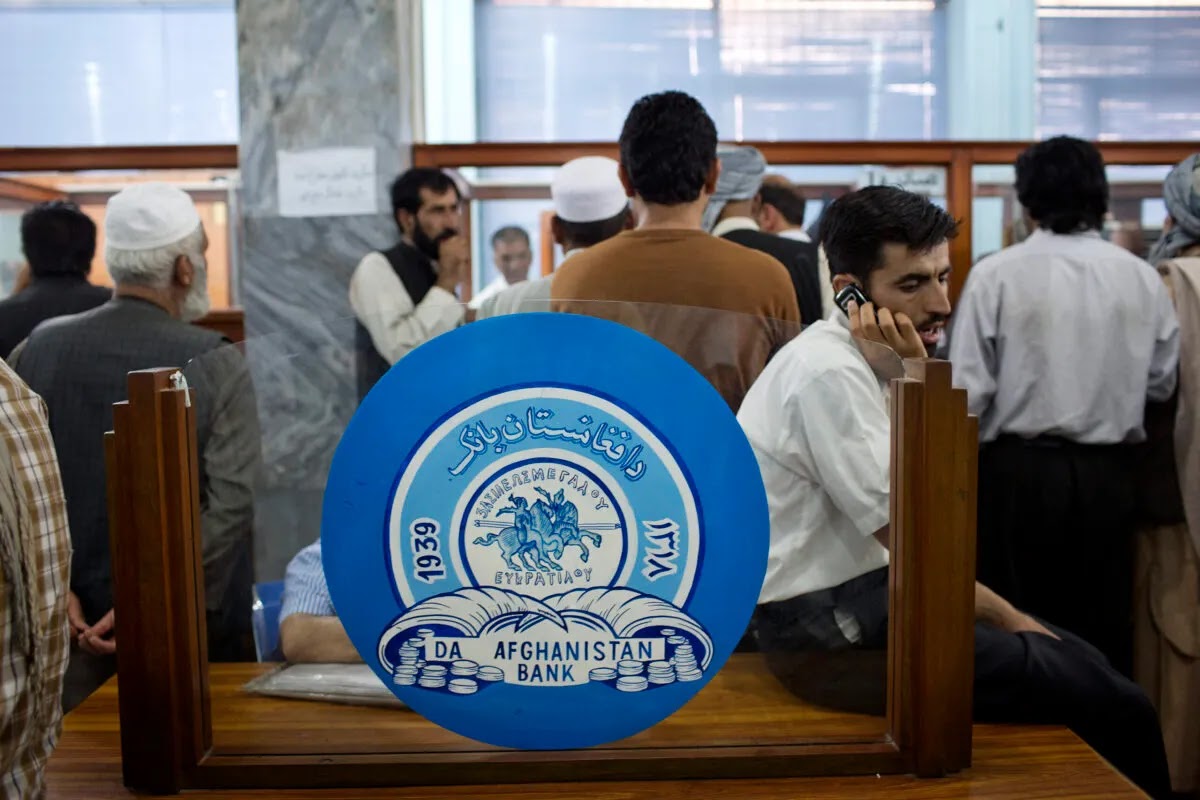
A TIMELESS EUCRATIDES COIN IS THE SEAL OF DA AFGHANISTAN BANK


The seal of Da Afghanistan Bank has the name of the bank in Pashto at the top and Latin script at the bottom, the year 1939 in which it was established, and a depiction of a Eucratides I-era coin with the Greek text, "ΒΑΣΙΛΕΩΣ ΜΕΓΑΛΟΥ ΕΥΚΡΑΤΙΔΟΥ" which means "Of the great King Eucratides".

On  the coin reverse, Eucratides chose to place the Dioscuri, the sons of Zeus, Castor and Pollux. Quite possibly, this was to emphasize his own royal ancestry. The monolingual coinage used only Greek legends and conformed to the Attic weight standard. It was issued in Bactria, north of the Hindu Kush mountains. 


Edited from Coins of India 

Friday, 30 June 2023

COIN OF ALCHON HUNS WITH GREEK SCRIPT


ALCHON HUNS ~ GREEK SCRIPT COIN

Greek influence in Asia 700 years after Alexander the Great

The Alchon Huns, (Bactrian: αλχον(ν)ο Alchon(n)o), also known as the Alchono, Alxon, Alkhon, Alkhan, Alakhana, and Walxon, were a nomadic people who established states in Central Asia and South Asia during the 4th and 6th centuries CE.They were first mentioned as being located in Paropamisus, and later expanded south-east, into the Punjab and Central India, as far as Eran and Kausambi. The Alchon invasion of the Indian subcontinent eradicated the Kidarite Huns who had preceded them by about a century, and contributed to the fall of the Gupta Empire, in a sense bringing an end to Classical India.


The invasion of India by the Huna peoples follows invasions of the subcontinent in the preceding centuries by the Yavana (Indo-Greeks), the Saka (Indo-Scythians), the Palava (Indo-Parthians), and the Kushans.


The Alchon Huns initially issued anonymous coins based on Sasanian designs. Several types of these coins are known, usually minted in Bactria, using Sasanian coinage designs with busts imitating Sasanian kings Shapur II (r.309 to 379 CE) and Shapur III (r.383 to 388 CE), adding the Alchon Tamgha  and the name "Alchono" (αλχοννο) in Bactrian script (a slight adaptation of the Greek script which had been introduced in the region by the Greco-Bactrians in the 3rd century BCE) on the obverse, and with attendants to a fire altar, a standard Sasanian design, on the reverse.It is thought the Alchons took over the Sasanian mints in Kabulistan after 385 CE, reusing dies of Shapur II and Shapur III, to which they added the name "Alchono".

SOURCE Coinsindia ,Wikipedia 


Thursday, 27 April 2023

ANCIENT CHINESE SILVER COIN WITH GREEK SCRIPT


Silver Bai Jin San Pin, Dragon Coin, from Emperor Han Wudi 119 BCE. the Dragon Coin.


Issued by Emperor Wu Di of the Western Han dynasty, presumably to strengthen trade with the Greco-Bactrian state since the script is in Greek characters.


 The territory of Bactria was called 大夏 Dàxià in Chinese. On the obverse we see a dragon. The reverse legend is in Greek characters.There have been many attempts to decipher the meaning but it seems it doesn't make sense in any way.2 chop marks, shao 少 for shao fu 少府 (emperor's private Treasury).Shao Fu 少府 mint.


SOURCE   Dr Raoul McLaughlin YouTube channel


Thursday, 12 January 2023

GREEKS AND KUSHANS IN CENTRAL ASIA ( VIDEO )


Coins form a significant corpus of evidence that allow the archaeologists, historians, and numismatists to reconstruct the past. Coins are not just money; they are symbols of wealth and power, and sometimes convey complex political messages. In addition to archaeological evidence, numismatical evidence is in Central Asia central to understanding the emergence and culmination of the Hellenistic and Kushan societies (4th century BCE – 3rd century CE), as there is virtually no available written source dating to these periods in this region. This lecture focuses on the evolution of the Graeco-Bactrian and Indo-Greek kingdoms as well as the Kushan Empire through their coinages. It examines the varied types of messages that coins convey, together with the latest archaeological discoveries relating to these periods in Central Asia.


By Dr. Olivier Bordeaux CNRS (National Center for Scientific Research, France), UMR 7041, ArScAn, Archéologies et Sciences de l'Antiquité, Archéologie de l'Asie centrale

Organizers: Benjamin Mutin & Farhod Razzokov 

SOURCE ARWA Association YouTube channel

Sunday, 1 January 2023

THE GOLD STATERS OF ALEXANDER’S SUCCESSORS


With no mass media, ancient coins functioned as powerful tools for propaganda due to their portability and potential to circulate widely. Rulers would carefully choose their types and each element of the designs of their coinage to convey a specific message to their subjects, allies, and enemies.

Alexander the Great understood this concept and carefully planned the specific details of his portraits on sculptures as well as coins. Alexander is represented most famously as Herakles on his tetradrachms. He aspired to be a hero himself and Herakles was the premier embodiment of strength, determination, and willpower in Greek Religion, traits central to Alexander’s mission of global dominance.

After Alexander died suddenly at the age of 32, the future of his vast empire was unknown. His generals scrambled to determine who should succeed him as Alexander had no heir.

On his deathbed, Alexander passed his signet ring to Perdiccas, the leader of his elite calvary, nominating him as his successor, but Perdiccas did not claim power immediately. Princess Roxana of Bactria was pregnant with Alexander’s child at the time of his death, and the gender of the baby was unknown.

Perdiccas argued that they should wait to see if the unborn child would be male and therefore have a legitimate claim to the throne. The infantry instead proposed that Philip III Arrhidaios, Alexander’s half-brother, should rule regardless of the gender of Roxana’s baby.

The factions reached a compromise, and when Alexander IV was born in August 323 BCE, he and Philip III were jointly made kings but acted only as figureheads, while Perdiccas would actually rule the Empire as regent.

This coin was minted within a year of Alexander’s death, and it retained the type started by Philip II of a portrait on the obverse and a charioteer driving galloping horses on the reverse. However, its style marked a significant deviation from any of the other gold staters of the era.

The type was struck in both Kolophon and Magnesia from a single obverse die which was transported and used in the two mints, indicating that it was clearly a critically important design that could not be easily replicated by a different artist due to its intricacy.

Most of the Macedonian staters depict the God Apollo, but this coin features Alexander himself, representing one of his earliest surviving portraits. It was engraved by an uncommonly talented artist, sculptural in nature, reflecting identical facial features to known depictions of Alexander in its magnificent, gem-like composition.


Alexander’s portrait was likely placed on the obverse in an attempt to legitimize the new haphazard regime, associating the image of the well-known ruler to denote his blessing. By replacing the God Apollo, the “Bringer of Light”, with the portrait of Alexander, the coin also conveys the message that Alexander carried the light and wisdom of Hellenistic society throughout the known world.

The coin’s beauty and historical importance have made it one of the most desirable and exciting of all gold staters minted in the name of Philip.

Despite the effort put into the development of this coin and the extensive negotiations, the new regime was met with confusion and discomfort, eventually resulting in the assassination of Perdiccas in 321 BCE and 40 years of war between the fragmented powerful generals, splitting Alexander’s Empire into the Ptolemaic Kingdom, the Seleucid Empire, the Kingdom of Pergamon, and Macedonia.

Edited from coinweek


Sunday, 4 April 2021

THE STAR AND CRESCENT ON ANCIENT GREEK COINS


At least four different Greek Goddesses have a strong connection to the Moon: Hecate, Selene, Artemis (Diana), and Aphrodite (Venus). The star and crescent appear as powerful symbols with many meanings, and are often found on ancient coins.

Athens Owl

Athens Tetradrachm - Crescent Owl


Head of Athena to right, wearing crested Attic helmet adorned with three olive leaves and palmette, round earring and pearl necklace. Rev. ΑΘΕ Owl standing right, head facing; behind, olive spray and crescent moon; all within incuse square.

The best-known crescent moon on an ancient coin is a small symbol behind the shoulder of the owl on the reverse of the silver tetradrachm of Athens, a popular trade coin accepted for centuries and widely imitated across the Mediterranean world. The crescent first appears on the coins shortly after Athens’ victory at the Battle of Marathon, fought beneath a waning moon (August or September 490 BCE). The crescent may also recall the crescent formation of the Greek ships at the decisive Battle of Salamis (September 480 BCE).


Tarentum

Tarentum Trihemiobol - Crescent and Star coin


Tarentum, a prosperous Greek city on the heel of the Italian “boot”, issued a tiny silver trihemiobol (0.78 g) c. 450 – 380 BCE showing a distaff (a tool used in spinning thread, symbolic of the local wool industry) between two stars and a crescent. On the more common and even tinier hemiobols of Tarentum (c. 325 – 228 BCE), stars and pairs of crescents, back to back, are the only designs on both sides of the coin.


Uranopolis and Byzantium


The small town of Uranopolis (“sky city”) in Macedon was dedicated to the Goddess Aprhrodite Urania. On its bronze coins (c. 300 BCE), the Goddess appears seated on a celestial globe. The star and crescent are depicted on the reverse, in a pattern that will be repeated on coins for centuries to come: the “horns” of the crescent point upward, and the star is a pellet with six or eight rays.


Uranopolis - Crescent and Star Ancient Coin


The Greek city of Byzantium (which would become Constantinople in 330 CE, and Istanbul after 1453) adopted this symbol on its coinage in the first century BCE. According to legend, in 340 BCE, when Philip of Macedon -father of Alexander the Great- besieged Byzantium, the appearance of a sudden light in the sky warned the defenders in time to prevent a surprise night attack on the walls. In gratitude to the lunar goddess Hecate, the city placed a star and crescent on its local coinage. This custom continued well into the Roman era.


Mithridates VI (135-63 BCE), King of Pontus in Asia Minor, was one of the most determined and resourceful enemies who ever fought the Roman Republic. In the year he was born, a comet appeared in the constellation of Pegasus. A fourth-century historian reported that it “burned so brightly for 70 days that the entire sky seemed to be on fire.”


King of Pontos Mithridates VI Eupator - Crescent Star


In 119 BCE another comet appeared, when 15-year-old Mithridates deposed his mother and seized the throne for himself. The star and crescent was the badge of his dynasty and it appears consistently on his coinage. A large star and crescent surrounded by a wreath forms the reverse of a unique gold stater of c. 93 BCE. On his abundant silver coinage, the star and crescent appears on the reverse as a small symbol beside a stag or Pegasus.


Edited from: https://coinweek.com/