Showing posts with label AFGHANISTAN. Show all posts

Sunday, 12 January 2025

NURISTANIS ~ THE DESCENDANTS OF ALEXANDER THE GREAT ~ VIDEO


The Nuristani people, residing in the Hindu Kush mountains of northeastern Afghanistan, have a unique cultural and historical heritage that has been influenced by various civilizations, including Greek elements introduced during the time of Alexander the Great.

Geography and Demography: The Nuristani inhabit the rugged mountainous region of Nuristan (formerly Kafiristan) in northeastern Afghanistan. This area is known for its isolated and inaccessible terrain, which has contributed to the preservation of their distinct culture.

Language and Ethnicity: The Nuristani languages form a distinct branch of the Indo-Iranian language family. The people are ethnically unique, with a rich oral tradition and a deep sense of community identity.

Pre-Islamic Religion: Prior to their conversion to Islam in the late 19th century, the Nuristani practiced a form of ancient polytheism. Their religious practices included rituals, festivals, and deities that were distinct from those of their neighboring Muslim and Hindu communities.


Alexander the Great and Hellenism

Alexander's Conquests: During his campaigns (334-323 BCE), Alexander the Great conquered vast territories, including parts of what is now Afghanistan. His presence in the region led to the establishment of several Greek-influenced cities and settlements.


Bactria and the Hellenistic Influence: The region of Bactria, located in modern-day northern Afghanistan, became a significant center of Hellenistic culture after Alexander's conquest. Greek settlers, art, architecture, and cultural practices took root in Bactria, influencing the surrounding regions.

Cultural Synthesis: The blending of Greek and local cultures, known as Hellenism, was evident in the art, architecture, and religious practices of the time. This cultural synthesis was particularly strong in areas like Bactria, where Greek and local traditions merged.


 Hellenistic Influence on the Nuristani

Geographical Proximity: Nuristan is geographically close to the regions influenced by Greek culture during the Hellenistic period, particularly Bactria.  The Nuristani were certainly part of the populations influenced by the Greek presence, as they say so themselves.


Art and Iconography: Some scholars suggest that certain aspects of Nuristani art and religious iconography reflect Hellenistic influences, such as the depiction of deities and mythological scenes that bear a resemblance to Greek styles.


Conversion and Cultural Changes

Islamic Conversion: In the late 19th century, the Nuristani were forcibly converted to Islam by the Emir of Afghanistan, Abdur Rahman Khan. This conversion led to significant changes in their religious and cultural practices, although some pre-Islamic traditions persisted. Despite the conversion to Islam, the Nuristani have managed to preserve many aspects of their pre-Islamic culture, language, and identity, maintaining a distinct cultural heritage within Afghanistan.


Monday, 18 November 2024

ZEUS ~ SERAPIS ~ OHRMAZD WITH KUSHAN WORSHIPPER ~ BACTRIA


This rare Central Asian votive panel depicts a deity (with nimbus) being approached by a male worshiper, probably nonroyal but portrayed as of equal stature to the god. Compositionally, they follow scenes of homage and investiture from the post-Hellenistic West and from Iran in which a king and a god appear side by side. A majestic figure with a full beard and long wavy hair, who has been identified as the supreme deity Zeus/Serapis/Ohrmazd, receives a suppliant in the characteristic Iranian short tunic and leggings, hands clasped in adoration. Here, the rich intercultural style that developed in the Kushan realm is clearly displayed: Indian divine iconography; the Iranian type of two-figured composition; and Greco-Roman naturalism in the drapery and pose, as well as in the use of light and shadow to suggest modeling. The panel has holes at the corners and was probably set up, together with three others acquired by the Museum (MMA 2000.42.1, .3, .4), on the interior walls of a sanctuary, perhaps a family shrine. 

Source MET  Museum

Saturday, 6 January 2024

SURKH KOTAL INSCRIPTION IN GREEK SCRIPT ~ ~ PULI KHUMRI ~ AFGHANISTAN


Displayed at the Kabul Museum, this limestone tablet is from the 2nd century CE and is inscribed with the Greek alphabet. It was found in Surkh Kotal, an ancient archaeological site about 18 km north of Puli Khumri, the capital of Afghanistan’s Baghlan province. Use of the Greek alphabet was common for centuries after the campaign by Alexander the Great in the 4th century BCE  and was used for a long time, together with other local alphabets.

Image source  ~ Wikipedia

Thursday, 21 December 2023

THE ADMINISTRATION SYSTEM OF THE GRECO ~ BACTRIAN KINGDOM


The structure of the administration of Greco-Bactrian kingdom closely followed that set up by Alexander, who in his turn had based his on the Iranian model of Darius I. Darius I had established in his provinces, beside the army commander and the Satrap a third post, that of royal representative or viceroy, but this post was abolished by Alexander. The ruler of the province was now known as ‘Strategos’, Darius’s provinces had been very large. In an empire many times greater than that of the Selukans, he had thirty three provinces while the Selukan kings divided their kingdom into seventy-two. The provinces were again divided into districts and sub-divisions.


The Bactrians converted the districts  into provinces ruled by the Satraps. In addition there were the towns, which followed the pattern of the Greek Polis. Alexander had set up about seventy townships. The Seleucid townships were military cantonments. The Greek city was administered by a council and an assembly.


Seleucia, situated on the banks of the Tigris, had a council of 300 which met every month and a larger assembly which held annual sessions. Not only was the assembly required to administer the town, but also to attend to the physical and cultural needs of the citizens. To this end, playgrounds, gymnasiums and theatres had been established. The official language was Greek. The magistrate of the city  was elected by the council.

The town also had an elected treasurer. Elections were generally held once every three years. Bactria and Gandhara were counted among the main Greek cities.

There were often marriages between Greek and non-Greek families.


The Mauryas too made foreigners Governors of provinces, as was the case in Gujarat. Books written in the first and second centuries CE mention how the Greeks dwelt in the Indian cities of Dashpur. The position was similar in the case of Bactria and Sogdia. It is possible of course that in other parts of Central Asia, the Greeks were not so easily absorbed into the local population as they were in India.


We have seen how Apollodotus’ coins bore nothing but Indian inscriptions and some of the Indian Greek kings stamped their money with the images of Indian gods. Menander openly embraced Buddhism. It was difficult to maintain any racial distinctions in India, because after the time of Alexander the Greek cantonments ceased to exist and when Dimitri I came he too pursued a policy of eliminating differences.


Edited from historydiscussion.net

Saturday, 28 October 2023

STATUETTE OF HERACLES ~ AI KHANUM ~ AFGHANISTAN


Statuette of Heracles. Around 150 BCE. This beardless Heracles, crowning himself with leaves, resonates with numismatic finds of the Greco-Bactrian king, Demetrius (190-175 BCE) . The piece provides some evidence for continuity in the first half of the second century in Aï Khanoum due to the Gymnasium’s dedication to Heracles.

Sunday, 1 October 2023

ALEXANDRIA ARACHOSIA ~ THE MODERN KANDAHAR OF AFGHANISTAN


Alexandria in Arachosia (Greek: Ἀλεξάνδρεια Ἀραχωσίας) also known as Alexandropolis (Ἀλεξανδρόπολις), was an ancient city that is now called Kandahar in Afghanistan. It was one of more than twenty cities founded  by Alexander the Great. It was founded around 330 BCE, on the foundations of an earlier Achaemenid fortress. Arachosia is the Greek name of an ancient province of the Achaemenid, Seleucid and Parthian empires. The province of Arachosia was centered around the Argandab valley in Kandahar. It did not reach the Hindu Kush, but it apparently extended east as far as the Indus River, although its exact extents are not yet clear.

After the conquests of Alexander the Great, Arachosia was ruled by the Satrap Sybirtius. In the 3rd century BCE, it is thought that the ambassador to the Indian court Megasthenes departed from the city to visit India:


Megasthenes lived with Sibyrtius, satrap of Arachosia, and often speaks of his visiting Sandracottus, the king of the Indians. Arrian, Anabasis Alexandri.


Isidorus of Charax in his 1st century CE "Parthian stations" itinerary described an "Alexandropolis, the metropolis of Arachosia", which he said was still Greek even at such a late time:


Beyond is Arachosia. And the Parthians call this White India; there are the city of Biyt and the city of Pharsana and the city of Chorochoad and the city of Demetrias; then Alexandropolis, the metropolis of Arachosia; it is Greek, and by it flows the river Arachotus. As far as this place the land is under the rule of the Parthians.

The remains of Alexandria in Arachosia are today found in the tell of Old Kandahar citadel in the western portion of the modern city. The citadel tell was excavated by the British Society for South Asian Studies through the 1970s and with the relative improvement in security from 2008 to 2009.


These excavations indicate that the Islamic walls were based on those from classical times, indicating what might be a square (tetragonis) shaped town, but one highly modified by the unusual topography. A triangular-shaped portion of the tell adjoining the Greek town is from the Buddhist era.


Alexander appears to have founded his town on the site of a 6th-century BCE Persian garrison point. The pass, river and junction of three long-distance trade routes made the location of strategic importance. To date, no Greek buildings have been found, but numerous coins, inscriptions and graves have been discovered. Further discoveries are anticipated as excavation reaches deeper strata of the tell.


The citadel walls have been shown to have contained circular towers similar to those at Farah, Balkh and Nadi Ali Sorkh Gdagh, although these could be Islamic in age.

 Edited from WIKIPEDIA

Thursday, 7 September 2023

THE CASTLE OF ALEXANDER THE GREAT ~ GARDEZ ~ PAKTIA ~ AFGHANISTAN


The old fortress in Gardez City. Originally built by the armies of Alexander the Great, and subsequently rebuilt by many of the invading armies to pass through Gardez, including the British and Soviets. The fortress, colloquially known as 'Castle Greyskull' by American troops which were  stationed in the area, was also home to an Afghan National Army detachment. U.S. Air Force photo by 1st Lt. John Severns

Source ~ Wikipedia

Monday, 7 August 2023

SURKH KOTAL INSCRIPTION IN GREEK SCRIPT ~ SAR -I-CHASHMA ~ BAGHLAN PROVINCE ~ AFGHANISTAN


A 25-line inscription came to light on the fourth terrace. Written in the Bactrian language in cursive Greek script, this significant find unlocked what little we know about the Kushans. It refers to repairs made when the temple was burned during a period of civil unrest following King Kanishka's death c. 140 CE. Another 50 blocks with fragmentary Greek script mention lining a well at the foot of the hill. The temple was finally abandoned during the 3rd century CE with the coming of the Persian Sasanians. In 1993 a similar inscription was accidentally found by mujahideen digging a trench at Robatak (Little Fort), not so very far north of Surkh Kotal. It also relates to the reign of King Kanishka.

Photo: Louis Dupree

Source Afghanistan center at Kaboul University

Monday, 3 July 2023

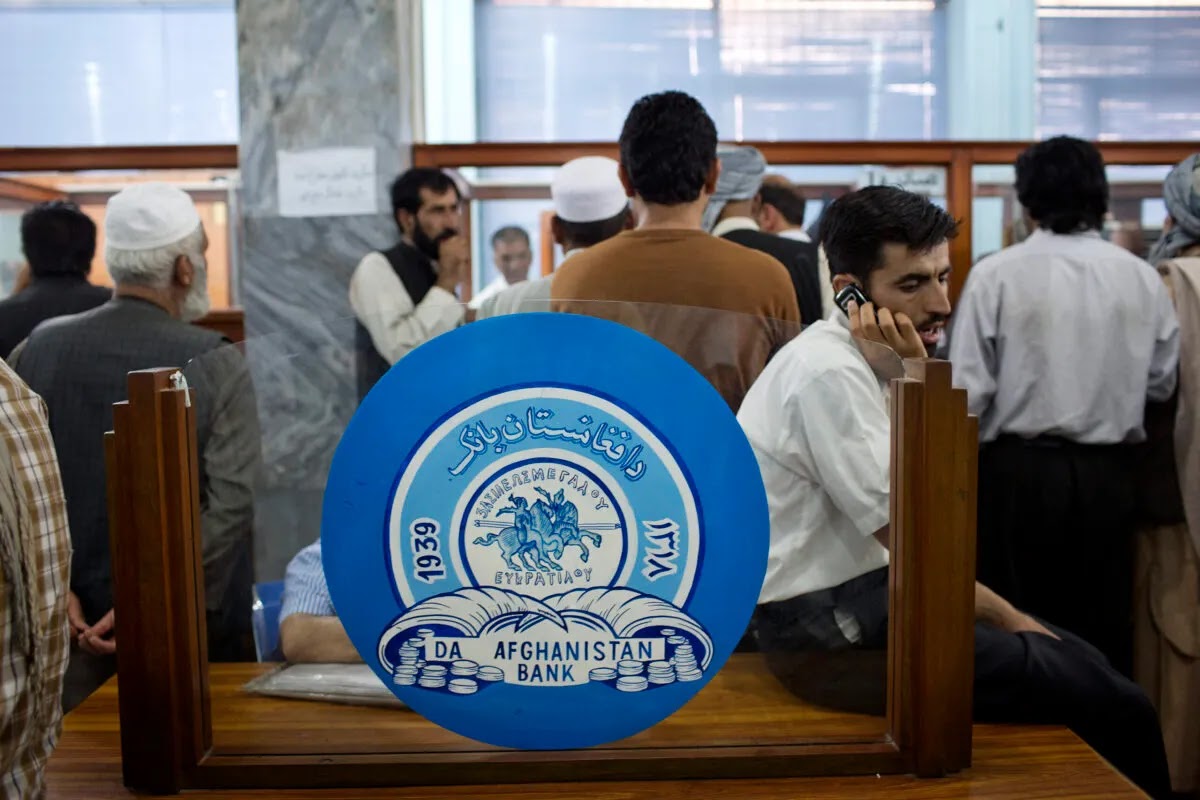
A TIMELESS EUCRATIDES COIN IS THE SEAL OF DA AFGHANISTAN BANK


The seal of Da Afghanistan Bank has the name of the bank in Pashto at the top and Latin script at the bottom, the year 1939 in which it was established, and a depiction of a Eucratides I-era coin with the Greek text, "ΒΑΣΙΛΕΩΣ ΜΕΓΑΛΟΥ ΕΥΚΡΑΤΙΔΟΥ" which means "Of the great King Eucratides".

On  the coin reverse, Eucratides chose to place the Dioscuri, the sons of Zeus, Castor and Pollux. Quite possibly, this was to emphasize his own royal ancestry. The monolingual coinage used only Greek legends and conformed to the Attic weight standard. It was issued in Bactria, north of the Hindu Kush mountains. 


Edited from Coins of India 

Tuesday, 31 January 2023

THE INDO - GREEKS :HERAKLES , MENANDER , AND THE BUDDHA


In antiquity, Gandhara was one of the most deeply-rooted hubs of Buddhism, and scholars have attempted to search for any possible encounters between Buddhists and the Greeks who settled in Central Asia and India. Fascinating pieces of evidence hint at these connections: the Pali text known as the Milindapañha ("The Questions of King Milinda") portrays the Indo-Greek king Menander I Soter as a Buddhist convert and saint swayed by the wisdom of the Sage Nagasena, while Emperor Ashoka dispatched missionaries to the Hellenistic kingdoms and ordered his beliefs to be inscribed in Greek on the rocks outside of Kandahar. Centuries later, the sculptors of Gandhara would adapt Greco-Roman mythology and designs to create beautiful works of art, resulting in the first known depictions of the Buddha in human form, and transforming the demigod Heracles into Heracles-Vajrapani, protector of the Buddha.

This video was taken from the YouTube channel The Hellenistic Age History Podcast.All credit goes to them.
 

Tuesday, 17 January 2023

THE LOST GREEK CITIES OF CENTRAL ASIA

For centuries, Bactria - a region shared by modern Afghanistan, Uzbekistan, and Tajikistan - was part of the Hellenistic world. Conquered by Alexander the Great, Bactria became the heart of a powerful Greek kingdom. And even after the Greco-Bactrian kingdom was overrun by nomads, its cities continued to thrive. This video explores their fates. 

Credit to YouTube channel  toldinstone


Monday, 15 February 2021

ALEXANDER THE GREAT CROSSES THE HINDU- KUSH


After his men suffered from frostbite and severe hunger while crossing a 3,700-meter-high pass in the Hindu Kush in April, when mountains were still covered in snow, Alexander got his hands on Bessus, who was turned over by his allies. Bessus was tied a post on the side of a road. After he was taunted and jeered, his ears and nose were cut off. After that he may have been dismembered but more likely he was crucified.


 Arrian wrote: “After the transaction of this business, he advanced against Bactra and Bessus, reducing the Drangians and Gadrosians to subjection on his march. He also reduced the Arachotians to subjection and appointed Menon viceroy over them. He then reached the Indians, who inhabit the land bordering on that of the Arachotians. All these nations he reached marching through deep snow and his soldiers experiencing scarcity of provisions and severe hardship. Learning that the Areians had again revolted, in consequence of Satibarzanes invading their land with , cavalry, which he had received from Bessus, he dispatched against them Artabazus the Persian with Erigyius and Caranus two of the Companions, also ordering Phrataphernes, viceroy of the Parthians, to assist them in attacking the Areians. An obstinately contested battle then took place between the troops of Erigyius and Caranus and those of Satibarzanes; nor did the barbarians give way until Satibarzanes, encountering Erigyius, was struck in the face with a spear and killed. Then the barbarians gave way and fled with headlong speed. 


 “In the meantime, Alexander was leading his army towards Mount Caucasus, where he founded a city and named it Alexandreia. Having offered sacrifice here to the Gods to whom it was his custom to sacrifice, he crossed Mount Caucasus, after appointing Proëxes, a Persian, viceroy over the land, and leaving Neiloxenus son of Satyrus, one of the Companions, with an army as superintendent. According to the account of Aristobulus, Mount Caucasus is as lofty as any in Asia, and most of it is bare, at any rate in that part where Alexander crossed it. This range of mountains stretches out so far that they say even that Mount Taurus, which forms the boundary of Cilicia and Pamphylia, springs from it, as do other great ranges which have been distinguished from the Caucasus by various names according to the position of each. Aristobulus says that in this part of the Caucasus nothing grew except terebinth trees and silphium; notwithstanding which, it was inhabited by many people, and many sheep and oxen graze there; because sheep are very fond of silphium. For if a sheep smells it even from a distance, it runs to it and feeds upon the flower. They also dig up the root, which is devoured by the sheep. For this reason in Cyrene, some drive their flocks as far as possible away from the places where their silphium is growing; others even enclose the place with a fence, so that even if the sheep should approach it they would not be able to get within the enclosure. For the silphium is very valuable to the Cyrenaeans.


 “Bessus, accompanied by the Persians who had taken part with him in the seizure of Darius, and by, of the Bactrians themselves and the Daans who dwelt on this side the Tanais, was laying waste the country at the foot of Mount Caucasus, in order to prevent Alexander from marching any further, both by the desolation of the land between the enemy and himself and by the lack of provisions. But none the less did Alexander keep up the march, though with difficulty, both on account of the deep snow and from the want of necessaries; but yet he persevered in his journey. When Bessus was informed that Alexander was now not far off, he crossed the river Oxus, and having burnt the boats upon which he had crossed, he withdrew to Nautaca in the land of Sogdiana. He was followed by Spitamenes and Oxyartes, with the cavalry from Sogdiana, as well as by the Daans from the Tanais. But the Bactrian cavalry, perceiving that Bessus had resolved to take to flight, all dispersed in various directions to their own abodes."


Friday, 5 February 2021

THE MARCH OF ALEXANDER THE GREAT TO BACTRIA ( AFGHANISTAN ) IN PURSUIT OF BESSUS


Arrian wrote: “Having settled these affairs, he [ Alexander the Great ] marched to Zadracarta, the largest city of Hyrcania, where also was the seat of the Hyrcanian government. Tarrying here 15 days, he offered sacrifice to the Gods according to his custom, and celebrated a gymnastic contest, after which he began his march towards Parthia; thence to the confines of Areia and to Susia, a city in that province, where Satibarzanes, the viceroy of the Areians, came to meet him. To this man he restored his viceregal dignity, and with him sent Anaxippus, one of the Companions, to whom he gave 40 horse-lancers so that he might be able to station them as guards of the localities, in order that the Areians might not be injured by the army in its march through their land. At this time came to him some Persians, who informed him that Bessus had assumed the erect tiara and was wearing the Persian dress, calling himself Artaxerxes instead of Bessus, and asserting that he was king of Asia. They said he had in attendance upon him the Persians who had escaped into Bactra and many of the Bactrians themselves; and that he was expecting the Scythians also to come to him as allies. [Source: Arrian the Nicomedian (CE. 92-175), “Anabasis of Alexander”, translated, by E. J. Chinnock, London: Hodder and Stoughton, 1884, gutenberg.org]


 “Alexander, having now all his forces together, went towards Bactra, where Philip son of Menela's came to him out of Media with the Greek mercenary cavalry which were under his own command, those of the Thessalians who had volunteered to remain, and the men of Andromachus. Nicanor, the son of Parmenio, the Commander of the shield-bearing guards, had already died of disease. While Alexander was on his way to Bactra, he was informed that Satibarzanes, viceroy of Areia, had killed Anaxippus and the horse-lancers who were with him, had armed the Areians and collected them in the city of Artacoana, which was the capital of that nation. It was also said that he had resolved, as soon as he ascertained that Alexander had advanced, to leave that place and go with his forces to Bessus, with the intention of joining that prince in an attack upon the Macedonians, wherever a chance might occur. When he received this news, he stopped the march towards Bactra, and taking with him the Companion cavalry, the horse-lancers, the archers, the Agrianians and the regiments of Amyntas and Coenus, and leaving the rest of his forces there under the command of Craterus, he made a forced march against Satibarzanes and the Areians; and having travelled stades in two days came near Artacoana.


Satibarzanes, however, no sooner perceived that Alexander was near, than being struck with terror at the quickness of his arrival, he took to flight with a few Areian horsemen. For he was deserted by the majority of his soldiers in his flight, when they also learned that Alexander was at hand. The latter made rapid marches in pursuit of the enemy, killed some of the men whom he discovered to be guilty of the revolt and who at that time had left their villages, fleeing, some one way, some another; and others of them he sold into slavery. He then proclaimed Arsames, a Persian, viceroy over the Areians. Being now joined by the men who had been left behind with Craterus, he marched into the land of the Zarangaeans, and reached the place where their seat of government was. But Barsaëntes, who at that time had possession of the land, being one of those who had fallen upon Darius in his flight, learning that Alexander was approaching, fled to the Indians who live this side of the river Indus. But they arrested him and sent him back to Alexander, by whom he was put to death on account of his guilty conduct towards Darius."


More about Bactria here : https://greekasia.blogspot.com/2019/05/bactria-ancient-greek-state-in.html

SOURCE: factsanddetails.com


Thursday, 9 April 2020

LIST OF THE ANCIENT CITIES CALLED 'ALEXANDRIA '


In a span of just 13 years, from 336 BCE to 323 BCE, Alexander the Great pushed the boundaries of his Macedonian Kingdom as far south as Egypt and as far east as India. Along with conquering region after region, people after people, he founded a series of cities which he named for himself.  These cities would generally serve as places to settle the many thousands of veteran soldiers who had followed him across the Middle East and into South Asia.  Many of these Alexandrias persist today: some with different names; some retaining versions of their original name.  Other Alexandrias have long since passed, and still others have been lost to history.  According to the great biographer/philosopher Plutarch, Alexander founded at least 70 cities, although this number probably include pre-existing settlements renamed and/or repopulated by Alexander.   The actual number of cities directly founded by Alexander regardless is known to be at least twenty, and most of those took his name. Below, a summary of the various Alexandrias (and other such derivative toponyms) in chronological order.


Alexandroupolis

Founded in 340 BCE, while Alexander was still a crown prince under his father Philip II. Little else is known about this presumably short-lived settlement other than its location was likely near the modern Bulgarian city of Sandanski in the extreme southwest of the country.

Alexandria Troas
 Originally founded in 334 BCE, this city on the east Aegean coast did not receive the name 'Alexandria' until 301 BCE, after being renamed by Lysimachus, Alexander’s successor in the region.  The suffix ‘Troas’ refers to the Troad, the historical name of the Biga Peninsula in Turkey at the southwest end of the Sea of Marmara, not far from Troy. A prominent city in its time- its population reached possibly 100,000 people- Alexandria Troas was refounded as a major Roman administration centre in 12 BCE and was even a possible candidate for becoming the new capital of the Roman Empire under Constantine (he, of course, would choose Byzantium).  The city remains a titular see of the Catholic Church but fell into decline in the medieval era.  Much of the city’s ruins were plundered for building material.  Among the ruins still visible there today are an old bath/gymnasium complex and an ancient stadium discovered in the 1970s but not unearthed until 2009.


Alexandria by the Latmus: This is likely the ancient fortress city of Alinda, in the modern-day Aydın Province of Turkey, which dated back hundreds of years before Alexander. Apparently refounded as a military settlement in 333 BCE, the city was returned to its previous name sometime before 81 BCE.  Coins were still being minted here into the 3rd century CE. 


Alexandria ad Issum/Alexandretta

Now known by its Turkish endonym İskenderun -although the modern city may just preserve the name of the ancient city rather than being a direct continuation-the city was founded on the Mediterranean coast in 333 BCE at the north entrance to Syria.  Alexandretta prospered until the 3rd century CE, when it was surpassed by neighbouring Antioch (Antakya).


Alexandria, Egypt:

 Easily the most famous of all Alexandrias and one that remains a major metropolis today of well over 4 million people, Alexandria, Egypt was founded in 331 BCE by Alexander to be the new centre of Hellenism in Egypt.

 The new city was built on the site of the pre-existing city of Rhacotis; within a century, it was the largest city in the world.  Despite the various rulers that have come and gone throughout the millennia (the Ptolemies, the Romans, the Sassanids, the Ottomans, the British, and the current republic of Egypt), Alexandria has maintained its prominence as the second city of Egypt after Cairo.


Alexandria Ariana
The first of many Alexandrias in the far east of the Macedonian Empire, this Alexandria is better known today as Herat, the main city of western Afghanistan. Prior to Alexander’s conquering of the region in 330 BCΕ, this city was very likely Artacoana, the capital of Aria.

Conquered by the Parthians in 167 CE, the name Heratwas derived over time from Aria.


Alexandria Prophthasia: Modern-day Farah, Afghanistan.  

Prophthasia was the capital of the Drangiana satrap of the Achaemenid Empire.  The ‘Alexandria’ prefix was added to the city’s name when Alexander came through in October of 330 BCE.  The name Phra for the city was first recorded in the 1st century CE.


Alexandria Arachosia

This is Kandahar, the second-largest city in Afghanistan.   Prior to Alexander’s arrival at the end of 330 BCE, this was likely the Achaemenid city of Kapisakaniš. Arachosia was another satrap roughly equivalent to today’s Kandahar and Helmand provinces.  The name ‘Kandahar’ itself derives from ‘Alexandria’ (Iskandariya).  Despite its location near the edge of the empire, the city remained culturally Greek for some time after Alexander’s death.  Today, Kandahar is known primarily as one of the major battlegrounds of the War in Afghanistan.


Alexandria Caucasiana

Not to be confused with the Caucasus region on the Europe/Asia border, Caucasus Indicus was an ancient exonym for the Hindu Kush.  This Alexandria was a 329 BCE refounding of the Achaemenid city of Kapisa to serve as Alexander’s base in the Hindu Kush (the location is 65 km north of modern Kabul).  The city would eventually be traded to the Indian king Chandragupta Maurya in 303 BCE by Alexander’s successors in exchange for 500 elephants.


Alexandria Eschate
‘Eschate’ translates to ‘farthest’, signifying this city’s position on the Jaxartes (Syr Darya) river that marked the northern edge of Alexander’s empire (reached in 329 BCE) where his troops would do battle against the Scythian tribes to the north and the Sogdian peoples that surrounded them.  Formerly the site of Cyropolis, the northeasternmost city of the Persian Empire of Cyrus the Great, Alexandria Eschate lay at the western end of the Fergana Valley, making it a major location on the Silk Road trading route connecting Europe and Asia.  Today, the city is called Khujand, the second-largest city and northernmost major city of Tajikistan.


Alexandria Oxiana

Moving to the south across the region of Sogdiana, Alexander refounded a Persian city on the Oxus (Amu Darya) river in 329 BCE.  For two centuries the city served as an outpost of Greek culture until its sacking by nomadic tribes in 145 BCE lead to its abandonment.  Today, it is known under the Uzbek name Ai-Khanoum (‘lady moon’ or ‘face in the moon’) on the Afghan side of the Oxus across from Tajikistan.  Between 1964 and 1978, Ai-Khanoum was excavated by French archaeologists, uncovering large amounts of Greek and Indian artefacts, as well as the ruins of a 5,000-seat theatre, numerous temples, and colonnaded courts.  Sadly, three-plus decades of warfare have devastated the archaeological site.


The ruins of Alexandria on the Oxus.


Alexandria Margiana
This city on the Murghab River in the middle of the Karakum Desert is most famous as the major Silk Road port of Merv/Marv and is the site of where the current city of Mary was developed in 1884, as a Russian military post after Russia’s conquering of the Emirate of Bukhara.  Later it would become a major centre of Turkmenistan’s cotton and natural gas industries.  Human settlement on this site dates back to prehistoric times and is mentioned in ancient Persian texts as Mouru and Margu.

  Whether or not it was Alexander himself who refounded the city in 328/327 BCE or his general Craterus, the city was temporarily renamed for him regardless.  A major cultural and religious crossroads, Merv is reputed to have been the largest city in the world in the mid-12th century with a population of 200,000, about twice that of modern-day Mary.  The only time the site was not settled occurred in the 19th century after the Bukharans razed Merv in 1794, deported the population, and environmentally wasted the city via dam breakages.


Alexandria Bucephalus
Founded in 326 BCE on the Hydaspes (Jhelum River) and named for Alexander’s beloved horse Bucephalus.  This site was located somewhere in the Punjab, perhaps near the modern Pakistani city of Jhelum.  The large dockyards described indicate that it was intended as a centre of commerce.  The city was renowned enough to appear eight centuries later as one of the easternmost places listed on the Tabula Peutingeriana.

Alexandria Nicaea
Located across the river from Alexandria Bucephalus and founded at the same time, evidently serving the same function (this is believed to be the modern town of Mong, which would place the city 34 km/21 mi downstream from Jhelum).  Nicaea translates to ‘victory’, as the Hydaspes River was the scene of Alexander’s last great victory in India over the king Porus, in May 326 BCE.  Alexander was impressed enough by Porus’ skill and bravery to let Porus rule in his name upon his departure. 

Alexandria on the Hyphasis
The furthest eastern outpost of the Macedonian Empire, this is ultimately where Alexander would begin his long turn back west after his troops mutinied upon his attempt to invade the kingdom of Magadha, having been pushed too far from home for too long to tolerate any further.  The Hyphasis is today’s Beas River in India’s Punjab state.

Alexandria en Indo Potamo (Alexandria on the Indus): Now heading south along the Indus River, Alexander founded this settlement in 325 BCE at the confluence of the Indus and Chenab River with 10 000 veterans and natives. Under its modern name of Uch Sharif, it would become a major centre of Islamic study and architecture.  The ruins of Alexander’s city are believed to lie underneath Uch’s citadel, much of which was washed away by a change in the course of the Chenab.

Alexandria Rhambacia
 Modern-day Bela, Pakistan near the mouth of the Indus, founded in the autumn of 325 BCE.

Alexandria Carmania
Assuming this was founded by Alexander and not by the later Seleucids, it would have to have been founded at the beginning of 324 BCE in Carmania (analogous to Iran’s Kerman Province).  Equated possibly with the modern locale of Golashkerd near the border with Kerman in Hormozgān.

Alexandria Susiana: 
One of the last cities founded before Alexander’s 323 BCE death upstream in Babylon, Alexander founded this city on an artificial hill above the Tigris River estuary in the spring of 324 BCE atop the older Persian settlement of Durine.  This city would go on to be better known under the name Charax Spasinu or simply Charax, an Ancient Greek reference to its palisaded fort.  Originally a bustling port with its centre located less than 2 km from the mouth of the river, the location is now 150 km (93 mi) from the Persian Gulf thank to the continual deposition of material in the Tigris-Eurphates delta, not far from modern Basra, Iraq.  The site of the old city has been identified but no excavations have taken place.

By K. KuschSource: Brewminate 

Saturday, 1 February 2020

ALEXANDER THE GREAT DEPICTED WITH BUDDHA ~ HADDA, AFGHANISTAN


When sculptors of Hadda in Afghanistan wanted to represent Vajrapani, the protector of the Buddha, they opted for a syncretic picture of Alexander the Great under the features of Hercules.Thus the impact caused by the conquest of Alexander the Great in India at the end of the 4th century BCE continued throughout the centuries, leaving reminiscences of the past in the spirit and the behaviour of the various populations of the region, both Greek and Asian.

 The statues in the above photo were in Tapa-i-Shotor.

More about the other sculptures of Hadda here: https://greekasia.blogspot.com/2019/07/hadda-city-of-23000-greco-buddhist.html

Source: Osmund Bopearachchi ( academia.edu ), Mysterious Questions in the World