Showing posts with label TAJIKISTAN. Show all posts

Thursday, 3 July 2025

BACTRIAN INSCRIPTION IN GREEK SCRIPT TAJIKISTAN


Ancient Greek alphabet inscriptions on a rock were recently discovered on a mountain in Tajikistan, a country in Central Asia,.

The engravings in Greek writing in the Bactrian region of that area reads, “ΕΙΔΙΗΛΟ Υ…ϸΑΟΝΑΝϸΑΕ ΟΟΗ-ΜΟ ΤΑΚ-ΤΟΕ,” which translates to “This is the…of the king of kings, Vima Tactu,” according to Nicholas Sims-Williams, a leading specialist in the study of the Bactrian language.

Archaeologists do not typically have the opportunity to discover new monuments in Tajikistan due to its natural landscapes.

The monuments in hard-to-reach mountainous areas are particularly difficult to identify. Local residents get the job done, however, and report their findings to archaeologists.

For example, in 1932, a local shepherd named Jura Ali discovered a basket filled with documents on Mount Mug. The finding turned out to be unique, as it was the first text in the Sogdian language found in the territory of historical Sogd. That study eventually led to the discovery of the settlement of ancient Penjikent.

Similarly, a resident of the village of Shol in the Hisor Sanginov district came across inscriptions in an unfamiliar letter in the mountains.

Bobomullo Bobomulloev, a researcher at the Institute of History, Archaeology and Ethnography of the National Academy of Sciences of Tajikistan, took over the examination of the discovery.

After closer analysis, the rock inscriptions indeed turned out to be in ancient writing. They were located on the northernmost part of the gorge near the right tributary of the Almosi River in a very picturesque place known among the local population as Khoja Mafraj.

The local shepherd Sanginov Khaitali, who made the find, said that the first time he had visited the area, he had found even more.

Due to avalanches, fragments with inscriptions fell to the foot of the cliff. The part that survived is carved on a flat rock surface in three lines, where there are twenty-three letters 

EDITED FROM m.akipress.com

Sunday, 5 November 2023

ALEXANDRIA ESCHATE ~ FERGANA VALLEY ~~ TADJIKISTAN


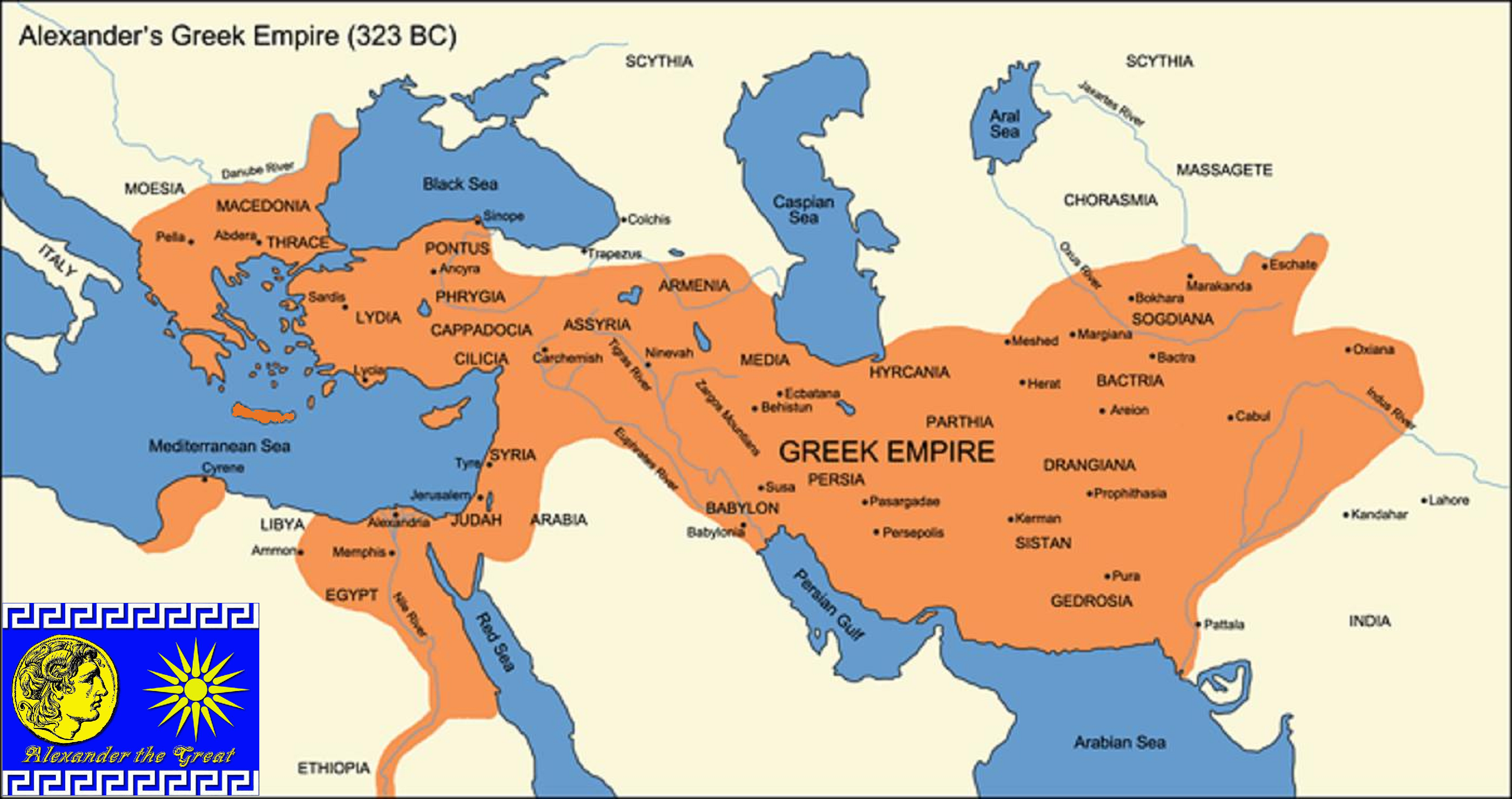
Alexandria Eschate (Attic Greek: Ἀλεξάνδρεια Ἐσχάτη, Doric Greek: Αλεχάνδρεια Ἐσχάτα, romanized: Alexandria Eschata, "Furthest Alexandria") was a city founded by Alexander the Great, at the south-western end of the Fergana Valley (modern Tajikistan) in August 329 BCE.It was the most northerly outpost of Alexander's Empire in Central Asia. Alexandria Eschate was established on the south bank of the river Jaxartes (Syr Darya), at or close to the site of modern Khujand (Хуҷанд; خجند). According to the Roman writer Curtius, Alexandria Ultima retained its Hellenistic culture as late as 30 BCE.

History

This region where Alexandria Eschate would be founded was ruled over by Persia starting with Xerxes I, and began to be populated by Greeks starting at that time. When Greeks  in other parts of the Persian empire rebelled or otherwise were troublesome, they would be exiled to the far northeast of the Persian empire, the most distant segment from their homelands. This was not uncommon, because the coastline of Asia Minor was populated by many Greek-culture and language cities, who had colonized the region in the previous centuries. By the time of the fall of Persia to Alexander the Great, many had been exiled to this region north of India, so Greek villages, language, and culture were therefore all common in that area. Cyrus the Great founded a city there as his northeastern-most outpost, known as Cyropolis, which may have later become the site of Alexandria Eschate, simply renamed.


Alexander the Great

Alexander, during his years of conquest, would regularly establish long-term outposts to support his advance, either renaming and permanently securing an existing city, or creating a long-term, albeit non-permanent, outpost built up like a town. According to Greek historian Plutarch, Alexander named seventy of these bases after himself.

Alexandria Eschate was located in the Ferghana Valley. 

In order to secure Sogdiana, the northeastern corner of the Persian empire, Alexander targeted Cyropolis and a half dozen other cities in 329 BCE.


Alexander first sent Craterus to Cyropolis, the largest of the towns holding Sogdiana against Alexander's forces. Craterus' instructions were to "take up a position close to the town, surround it with a ditch and stockade, and then assemble such siege engines as might suit his purpose...." The idea was to keep the inhabitants focused on their own defenses and to prevent them from sending assistance out to the other towns. Starting from Gazza, Alexander went on to conquer the other surrounding towns. Five of the seven towns were taken in two days. Many of the inhabitants were killed. Alexander then arrived at Cyropolis, which was the best fortified of the towns and had the largest population. It also had reputedly the best fighters of the region. Alexander battered Cyropolis' defenses with the siege engines. While the bombardment went on, Alexander ordered certain of his troops to sneak through a dried-up water course that went under the town's wall. Alexander also joined on this mission and once inside his troops opened the town's gate to admit his attacking force. Once the natives saw that the town was taken, they fell violently upon the attackers. Alexander received a violent blow from a stone that landed upon his head and neck. Craterus was wounded by an arrow. But the defenders were driven off. Arrian puts the defender's force at about 15,000 fighting men and claims that 8,000 of them were killed in the first phase of the operation. The rest apparently sought refuge inside the town's central fortress, but surrendered after one day for lack of water.


Accounts of how the battle went down differ among authors. Arrian cites Ptolemy as saying Cyropolis surrendered from the start, and Arrian also states that according to Aristobulus the place was stormed and everyone was massacred.


One, probably Cyropolis, came to be called Alexandria Eschate, his northeastern-most outpost. As with most other cities founded by Alexander, a group of retired and/or wounded veterans from his army was settled there, joining the large population of Greek exiles settled in the area by Persia in previous generations.

Because Alexandria Eschate was surrounded by Sogdian tribes, and was about 300 km (186 mi) north of the nearest Greek settlement, at Alexandria on the Oxus in Bactria, the Greeks built a 6.0 km (3.7 mi) wall around the city which, according to the ancient authors, was completed in about 20 days.It experienced numerous conflicts with the local population.


Alexandria Eschate was located 300 km north-west of the main Greek colonies in Central Asia, at Bactria.

From 250 BCE, the city likely had greater contact with Bactria, after the Greco-Bactrian king Euthydemus I extended his control into Sogdiana.


Alexandria Eschate was also located around 400 km (249 mi) west of the Tarim Basin (now Xinjiang, China), where other Indo-European peoples, like the Khotanese, Tocharians, Wusun and/or Yuezhi were established. There are indications that Greek expeditions travelled as far as Kashgar. The historian Strabo claims that the Greeks "extended their empire even as far as the Seres and the Phryni .


"Seres" meant either China proper – in which case the Greeks achieved the first direct contact between China and a European society, some time around 200 BCE – or the peoples of the Tarim. In any case, a city known to the Chinese as Dayuan, which was mentioned by scholars from the Han dynasty (1st century BCE to 2nd century CE), is speculated to refer to Alexandria Eschate. The prefix da meant "Great", while the suffix Yuan was the Chinese rendition of Ionians.


Chinese embassies were established in Dayuan, beginning with Zhang Qian opened around 130 BCE. Soon the city and the rest of Dayuan were conquered completely by the Han after winning the War of the Heavenly Horses. This contributed to the opening up the Silk Road from the 1st century BCE. Dayuan means "Great Ionians" in the Chinese language, Greeks generally being known in Asia by some variant of "Ionians". See Names of the Greeks: Ionians, Yunani, and Yavan for more information.


Archaeological remains

The remains of Alexander's town lie in the tell of the old citadel in Khojand. Although the oldest surface remains of the walls date only to the 10th century, Soviet and Tajik excavations of the site have revealed that below the modern surface are medieval, Hellenistic and Achaemenid layers. These layers have revealed fortifications dating to around the 4th century BCE.


Other remains include household utensils, armaments and building materials which are exhibited in the Museum of Regional Studies in Khojand. The site has also revealed numerous Hellenistic coins and pottery. 

In the Tabula Peutingeriana, below the city there is a rhetorical question in Latin: "Hic Alexander responsum accepit: usque quo Alexander?" (English: Here Alexander accepted the answer: "Until where, Alexander?") — referencing both his insatiable appetite for conquest and a legend from the Alexander Romance in which "celestial creatures" admonished Alexander to not pursue further explorations, which would ultimately lead to his untimely death.


Edited from WIKIPEDIA

Thursday, 9 April 2020

LIST OF THE ANCIENT CITIES CALLED 'ALEXANDRIA '


In a span of just 13 years, from 336 BCE to 323 BCE, Alexander the Great pushed the boundaries of his Macedonian Kingdom as far south as Egypt and as far east as India. Along with conquering region after region, people after people, he founded a series of cities which he named for himself.  These cities would generally serve as places to settle the many thousands of veteran soldiers who had followed him across the Middle East and into South Asia.  Many of these Alexandrias persist today: some with different names; some retaining versions of their original name.  Other Alexandrias have long since passed, and still others have been lost to history.  According to the great biographer/philosopher Plutarch, Alexander founded at least 70 cities, although this number probably include pre-existing settlements renamed and/or repopulated by Alexander.   The actual number of cities directly founded by Alexander regardless is known to be at least twenty, and most of those took his name. Below, a summary of the various Alexandrias (and other such derivative toponyms) in chronological order.


Alexandroupolis

Founded in 340 BCE, while Alexander was still a crown prince under his father Philip II. Little else is known about this presumably short-lived settlement other than its location was likely near the modern Bulgarian city of Sandanski in the extreme southwest of the country.

Alexandria Troas
 Originally founded in 334 BCE, this city on the east Aegean coast did not receive the name 'Alexandria' until 301 BCE, after being renamed by Lysimachus, Alexander’s successor in the region.  The suffix ‘Troas’ refers to the Troad, the historical name of the Biga Peninsula in Turkey at the southwest end of the Sea of Marmara, not far from Troy. A prominent city in its time- its population reached possibly 100,000 people- Alexandria Troas was refounded as a major Roman administration centre in 12 BCE and was even a possible candidate for becoming the new capital of the Roman Empire under Constantine (he, of course, would choose Byzantium).  The city remains a titular see of the Catholic Church but fell into decline in the medieval era.  Much of the city’s ruins were plundered for building material.  Among the ruins still visible there today are an old bath/gymnasium complex and an ancient stadium discovered in the 1970s but not unearthed until 2009.


Alexandria by the Latmus: This is likely the ancient fortress city of Alinda, in the modern-day Aydın Province of Turkey, which dated back hundreds of years before Alexander. Apparently refounded as a military settlement in 333 BCE, the city was returned to its previous name sometime before 81 BCE.  Coins were still being minted here into the 3rd century CE. 


Alexandria ad Issum/Alexandretta

Now known by its Turkish endonym İskenderun -although the modern city may just preserve the name of the ancient city rather than being a direct continuation-the city was founded on the Mediterranean coast in 333 BCE at the north entrance to Syria.  Alexandretta prospered until the 3rd century CE, when it was surpassed by neighbouring Antioch (Antakya).


Alexandria, Egypt:

 Easily the most famous of all Alexandrias and one that remains a major metropolis today of well over 4 million people, Alexandria, Egypt was founded in 331 BCE by Alexander to be the new centre of Hellenism in Egypt.

 The new city was built on the site of the pre-existing city of Rhacotis; within a century, it was the largest city in the world.  Despite the various rulers that have come and gone throughout the millennia (the Ptolemies, the Romans, the Sassanids, the Ottomans, the British, and the current republic of Egypt), Alexandria has maintained its prominence as the second city of Egypt after Cairo.


Alexandria Ariana
The first of many Alexandrias in the far east of the Macedonian Empire, this Alexandria is better known today as Herat, the main city of western Afghanistan. Prior to Alexander’s conquering of the region in 330 BCΕ, this city was very likely Artacoana, the capital of Aria.

Conquered by the Parthians in 167 CE, the name Heratwas derived over time from Aria.


Alexandria Prophthasia: Modern-day Farah, Afghanistan.  

Prophthasia was the capital of the Drangiana satrap of the Achaemenid Empire.  The ‘Alexandria’ prefix was added to the city’s name when Alexander came through in October of 330 BCE.  The name Phra for the city was first recorded in the 1st century CE.


Alexandria Arachosia

This is Kandahar, the second-largest city in Afghanistan.   Prior to Alexander’s arrival at the end of 330 BCE, this was likely the Achaemenid city of Kapisakaniš. Arachosia was another satrap roughly equivalent to today’s Kandahar and Helmand provinces.  The name ‘Kandahar’ itself derives from ‘Alexandria’ (Iskandariya).  Despite its location near the edge of the empire, the city remained culturally Greek for some time after Alexander’s death.  Today, Kandahar is known primarily as one of the major battlegrounds of the War in Afghanistan.


Alexandria Caucasiana

Not to be confused with the Caucasus region on the Europe/Asia border, Caucasus Indicus was an ancient exonym for the Hindu Kush.  This Alexandria was a 329 BCE refounding of the Achaemenid city of Kapisa to serve as Alexander’s base in the Hindu Kush (the location is 65 km north of modern Kabul).  The city would eventually be traded to the Indian king Chandragupta Maurya in 303 BCE by Alexander’s successors in exchange for 500 elephants.


Alexandria Eschate
‘Eschate’ translates to ‘farthest’, signifying this city’s position on the Jaxartes (Syr Darya) river that marked the northern edge of Alexander’s empire (reached in 329 BCE) where his troops would do battle against the Scythian tribes to the north and the Sogdian peoples that surrounded them.  Formerly the site of Cyropolis, the northeasternmost city of the Persian Empire of Cyrus the Great, Alexandria Eschate lay at the western end of the Fergana Valley, making it a major location on the Silk Road trading route connecting Europe and Asia.  Today, the city is called Khujand, the second-largest city and northernmost major city of Tajikistan.


Alexandria Oxiana

Moving to the south across the region of Sogdiana, Alexander refounded a Persian city on the Oxus (Amu Darya) river in 329 BCE.  For two centuries the city served as an outpost of Greek culture until its sacking by nomadic tribes in 145 BCE lead to its abandonment.  Today, it is known under the Uzbek name Ai-Khanoum (‘lady moon’ or ‘face in the moon’) on the Afghan side of the Oxus across from Tajikistan.  Between 1964 and 1978, Ai-Khanoum was excavated by French archaeologists, uncovering large amounts of Greek and Indian artefacts, as well as the ruins of a 5,000-seat theatre, numerous temples, and colonnaded courts.  Sadly, three-plus decades of warfare have devastated the archaeological site.


The ruins of Alexandria on the Oxus.


Alexandria Margiana
This city on the Murghab River in the middle of the Karakum Desert is most famous as the major Silk Road port of Merv/Marv and is the site of where the current city of Mary was developed in 1884, as a Russian military post after Russia’s conquering of the Emirate of Bukhara.  Later it would become a major centre of Turkmenistan’s cotton and natural gas industries.  Human settlement on this site dates back to prehistoric times and is mentioned in ancient Persian texts as Mouru and Margu.

  Whether or not it was Alexander himself who refounded the city in 328/327 BCE or his general Craterus, the city was temporarily renamed for him regardless.  A major cultural and religious crossroads, Merv is reputed to have been the largest city in the world in the mid-12th century with a population of 200,000, about twice that of modern-day Mary.  The only time the site was not settled occurred in the 19th century after the Bukharans razed Merv in 1794, deported the population, and environmentally wasted the city via dam breakages.


Alexandria Bucephalus
Founded in 326 BCE on the Hydaspes (Jhelum River) and named for Alexander’s beloved horse Bucephalus.  This site was located somewhere in the Punjab, perhaps near the modern Pakistani city of Jhelum.  The large dockyards described indicate that it was intended as a centre of commerce.  The city was renowned enough to appear eight centuries later as one of the easternmost places listed on the Tabula Peutingeriana.

Alexandria Nicaea
Located across the river from Alexandria Bucephalus and founded at the same time, evidently serving the same function (this is believed to be the modern town of Mong, which would place the city 34 km/21 mi downstream from Jhelum).  Nicaea translates to ‘victory’, as the Hydaspes River was the scene of Alexander’s last great victory in India over the king Porus, in May 326 BCE.  Alexander was impressed enough by Porus’ skill and bravery to let Porus rule in his name upon his departure. 

Alexandria on the Hyphasis
The furthest eastern outpost of the Macedonian Empire, this is ultimately where Alexander would begin his long turn back west after his troops mutinied upon his attempt to invade the kingdom of Magadha, having been pushed too far from home for too long to tolerate any further.  The Hyphasis is today’s Beas River in India’s Punjab state.

Alexandria en Indo Potamo (Alexandria on the Indus): Now heading south along the Indus River, Alexander founded this settlement in 325 BCE at the confluence of the Indus and Chenab River with 10 000 veterans and natives. Under its modern name of Uch Sharif, it would become a major centre of Islamic study and architecture.  The ruins of Alexander’s city are believed to lie underneath Uch’s citadel, much of which was washed away by a change in the course of the Chenab.

Alexandria Rhambacia
 Modern-day Bela, Pakistan near the mouth of the Indus, founded in the autumn of 325 BCE.

Alexandria Carmania
Assuming this was founded by Alexander and not by the later Seleucids, it would have to have been founded at the beginning of 324 BCE in Carmania (analogous to Iran’s Kerman Province).  Equated possibly with the modern locale of Golashkerd near the border with Kerman in Hormozgān.

Alexandria Susiana: 
One of the last cities founded before Alexander’s 323 BCE death upstream in Babylon, Alexander founded this city on an artificial hill above the Tigris River estuary in the spring of 324 BCE atop the older Persian settlement of Durine.  This city would go on to be better known under the name Charax Spasinu or simply Charax, an Ancient Greek reference to its palisaded fort.  Originally a bustling port with its centre located less than 2 km from the mouth of the river, the location is now 150 km (93 mi) from the Persian Gulf thank to the continual deposition of material in the Tigris-Eurphates delta, not far from modern Basra, Iraq.  The site of the old city has been identified but no excavations have taken place.

By K. KuschSource: Brewminate 

Sunday, 29 December 2019

ISKANDERKUL : THE LAKE OF ALEXANDER THE GREAT IN TAJIKISTAN


Iskanderkul is the biggest lake in the Fann Mountains.Located in the north-west of Tajikistan, only a few hours from Dushanbe, it is one of the most beautiful glacial lakes in the region.

On the north slope of Gissar Range in the Fann Mountains, this triangle-shaped lake is at an altitude of 2,195m and spans 3.4 square kilometres with a depth of 72 meters.

Even the Tajik president thinks so highly of it, that he has a built himself a holiday house there.

The lake’s name ‘Iskanderkul’ means “Lake of Alexander”, after the famous Greek  Alexander the Great.


Legend has it Alexander the Great created the lake by damming the river in order to annihilate a village which had opposed him.
Whether that’s true or not will never be known, but there may actually be a different story.

Scientists did discover that once there was an earthquake in the area, and a rockslide blocked the Sarytag river.
Their theory is that water pooled and Iskanderkul Lake was created. But you can believe what you want.

Today there are a couple of guesthouses you can stay in right by the lake, and there are lots of fun activities in close proximity.

Saturday, 23 November 2019

GREEK INSCRIPTION FROM AN ALTAR OF GODDESS HESTIA IN TAJIKISTAN


In an inscription found in the Kuliab area, (ancient Western Greco-Bactria) and dated to 200-195 BCE, a Greek by the name of Heliodotos, dedicated a fire altar to the Greek Goddess Hestia. In the inscription which was on the altar, Heliodotos mentions the Greco-Bactrian king Euthydemus I as 'the greatest of all kings', and his son Demetrius I as "Demetrios Kalinikos" (Demetrius the Glorious Conqueror):


Heliodotos inscription

τόνδε σοι βωμὸν θυώδη, πρέσβα κυδίστη θεῶν
Ἑστία, Διὸς κ(α)τ᾽ ἄλσος καλλίδενδρον ἔκτισεν
καὶ κλυταῖς ἤσκησε λοιβαῖς ἐμπύροις Ἡλιόδοτος
ὄφρα τὸμ πάντων μέγιστον Εὐθύδημον βασιλέων
τοῦ τε παῖδα καλλίνικον ἐκπρεπῆ Δημήτριον
πρευμενὴς σώιζηις ἐκηδεῖ(ς) σὺν τύχαι θεόφρον[ι]

"Heliodotos dedicated this fragrant altar for Hestia, venerable Goddess, illustrious amongst all, in the grove of Zeus, with beautiful trees; he made libations and sacrifices so that the greatest of all kings Euthydemos, as well as his son, the glorious, victorious and remarkable Demetrios, be preserved of all pains, with the help of Tyche with divine thoughts."


Source: Wikipedia

Saturday, 11 May 2019

ISKANDARI PAMIRSKI ~ THE TAJIK TRIBE OF ALEXANDER THE GREAT


It seems like a fairy tale, one of those told by the Iskandari Pamirski in the heights of Tajikistan, but it is true. There are entire villages inhabited by descendants of Alexander the Great's soldiers in the depths of the East, οn the inaccessible mountains of the Pamir range. 
Proud of their Greek origins, they have kept the memory of the Macedonian commander alive, 20 centuries after he passed through their part of the world. The discovery of these completely unknown villages was made by Greek historical researcher and film director Dimitris Manolesakis just a few months ago. He talked to Kathimerini about his journey into the Pamir and our distant compatriots. «Life is difficult here, very difficult, but with Iskandar's help, all will be well, very well,» says the old man. His face is peaceful, his voice optimistic. Behind him, the peaks of the Pamir mountains stand against a clear blue sky. «Now that Dimitris has found us, we feel as if we are flying high into the sky,» he says, he says, his face shining ecstatically. His village, 4,000 meters above sea level, is indeed not far from the sky. The Pamir range is one of the highest in the world, but also one of the most isolated. 

These silent, rugged mountains of central Asia have never known invasion, except by one single leader some 2,333 years ago,Alexander the Great. He was revered because he did not oppress the local people, but instead drew them into his endless enthusiasm for life and learning. When he departed, he left behind some of his soldiers of whom traces can still be seen in the faces of their descendants, who inhabit these mountains. Since then, the traditions have been retained, the faith kept. Not many invaders are the object of reverence, let alone deified, particularly after 20 centuries. Yet this is what Alexander managed to do. Or as they know him, Iskandar. They have named themselves after him: Iskandari Pamirski, the Alexandrians of the Pamir. 
Yet, just a few months ago no one knew of their existence. Last fall, Greek historical researcher and film director Dimitris Manolesakis came upon them after persistent and painstaking exploration among the Pamir mountains in Uzbekistan, Tajikistan and the borders of Afghanistan, China and Kirghizia, in what used to be ancient Sogdia and Bactria, where, according to Marco Polo, lived the descendants of Alexander the Great's troops. As it appears, they still live there. Manolesakis discovered five of these villages. There are more, but at a distance of several days' journey. 
The five villages he visited are at heights ranging from 3,000 to 4,000 meters above sea level on different plateaus of the Pamir range. 
Greeks in the heart of Asia
The first to mention the existence of descendants of Alexander's soldiers was the British officer and philhellene Sir George Robertson, who discovered the Kafir-Kalash in the Indian Caucasus in the Himalayas in 1895, in what is now Pakistan, on the Chitral plateau. He made a study of the people and wrote a book about them. Manolesakis was the first Greek to make a film about the Kafir-Kalash, who believe in the Gods of Olympus and retain ancient Greek customs (hence «Kafir» or unbelievers, i.e. non-Muslims), for Greek state television's educational service. Several years ago, he travelled to about eight of their villages in the inhospitable gorges of the Indian Caucasus. The descendants of Greeks in the Pamir were a genuine discovery; until recently, they were unknown to the outside world. On his dangerous trip into the Pamirs, by jeep and on foot, he was helped by Professor Giorgos Michailidis of Tashkent and the historian and museum director Sohinbek Alloueddin.
 "I didn't find them where Marco Polo said they were, but even higher; centuries ago they had fled to higher plateaus, probably to escape invaders,"  Manolesakis said. "These people are proud of their origins, they tell amazing stories and legends about the strength, wisdom and generosity of Iskandar. Although they are Muslims, at least that is what they declare themselves, they believe in and worship Alexander the Great. They have deified him. They believe not only that he has divine power, but miracle-working abilities." Their own religious leader, the imam, along with other clerics and local leaders, related on camera some of the miracles attributed to the god-king Iskandar. "If a woman cannot have a child, she goes to Iskandar's grave to pray and when she comes back, she gets pregnant", they say. Every spring and fall they go to pray at a grave which is high in the Yasmullah mountains, and which they believe is that of Iskandar. One of their ancestors found the grave about two centuries ago. It is obviously a cenotaph, but that is of little importance to the people who walk 68 difficult kilometers (42 miles) to honor Iskandar and to ask for his help.

The five villages found by Manolesakis are scattered around the Pamirs and are not aware of each others' existence. They call themselves by different names, according to the region they inhabit: Iskandari Pamirski (Alexandrians of the Pamir), Iskandari Kouli (Alexandrians of the Lake), and Kalashi Pamirski (Kalash of the Pamirs). The latter come from among the Kalash of the Himalayas in Pakistan. Obviously some of their number had been exiled from the Chitral plateau and sought refuge in the Pamir. Just as the Kalash of the Himalayas, the Kalash of the Pamirs have preserved ancient Greek customs, which they observe in secret places. The descendants of Greeks in the Pamirs speak a language that is a mixture of Farsi, Uzbek, Afghan and ancient Greek words and roots. "For example, they use the Greek phrase eis kalon to denote 'beautiful', and gynaik for woman" said Manolesakis.

Stuff of Legends

 They have a number of legends about Alexander the Great. One of them refers to Iskandar as a very strong man, who lifted a three-ton rock and put it between two distant points to form a bridge. Whoever can lift that rock, according to the legend, will see Alexander underneath, who will then rise up and read the Koran. Another legend, from the Lake region, tells of how the lake was created. Alexander arrived there with his troops ready to do battle with local tribes. However, shortly before the battle, the heavens opened and so much rain fell that the plain became a lake dividing the two armies. The battle was never fought and the two armies made peace. Many of Alexander's soldiers stayed there and had families. Sometimes at dawn, the Alexandrians of the Lake see Alexander rising from the lake on his horse Bucephalus, or else the horse on its own, galloping around and mating with the local mares. Their legend about Alexander and the fountain of youth is slightly different from the Greek legend. A king offers Alexander some water from the fountain of youth, but tells him to think carefully before deciding. Alexander says he doesn't want to become immortal; he wants his work to be immortal. The king explains to him that no one has ever drunk it for fear of living forever and suffering forever. The descendants of Alexander's men are the subject of a documentary which will be part of a series directed by Manolesakis titled "Alexander of the Peoples" being made under the aegis of the Foreign Ministry and the Thessaloniki prefecture. It aims to provide an approach the life and times of Alexander, through the memories of the peoples of Asia.

SOURCE : ekathimerini.com