Wednesday, 22 November 2023

THE GREEK KINGS WHO RULED INDIA


Around 170 BCE, two massive armies left Taxila for the great city of Pataliputra. One army marched through Punjab and the Gangetic plains, while the other headed down the Indus, then up through Malwa, and finally met the other at Pataliputra. These were the Greek armies of ‘Yavanaraja Dimita’, as the Bactrian-Greek ruler Demetrius I was known to Indians.


The Mauryan Empire had collapsed and Pushyamitra Shunga had just seized power after assassinating the last Mauryan ruler, Brihadratha Maurya. Taking advantage of the chaos, Demetrius I set out to complete what Alexander the Great did not have time to achieve – establish a Greek Kingdom in India.


One part of Demetrius’s army, under his general Menander, marched through Punjab, sacked Saketa (Ayodhya) and Mathura and captured Pataliputra. The rest of the army, under Apollodotus, marched down the Indus and captured the great city of Ujjain. Pataliputra and Ujjain fell, and with Demetrius at Taxila, Menander at Pataliputra and Apollodotus at Ujjain, the Greeks held three of the most important cities in India at the time.

The dream of ‘Yavanaraja Dimita’ was fulfilled, albeit for a short period. To underline the fact that he was now the ‘Master of India’, Demetrius minted coins that showed him wearing a headdress with an elephant, a symbol most closely associated with India.


We know of this forgotten chapter of Indian history from the unlikeliest of sources – a Sanskrit grammar textbook. In Mahabhasya, a 2nd century BCE text on the rules of grammar, Rishi Patanjali engages in a discussion on an ‘imperfective tense’, explaining that “the imperfect should be used to signify an action not witnessed by the speaker but capable of being witnessed by him and known to people in general”. To illustrate his point, he cites two examples. “Arunad Yavanah Saketam” [Yavanas besieged Saketa (Ayodhya)] and “Arunad Yavano Madhyamikam” (Madhyamikas were besieged by the Yavanas).

This has led historians like Dr R G Bhandarkar, Dr R C Mazumdar and others to conclude that there was indeed a Greek invasion of India during the lifetime of Rishi Patanjali. Another Sanskrit text, Gargi Samhita, an astrological work dating to the same time as Mahabhasya, also gives an account of the ‘Yavana’ invasion of Pataliputra.

Who were these ‘Yavanas’ and how did they reach the heart of India?

It is popularly believed that Greek contact with India began with the invasion of Alexander the Great in 327-325 BCE. However, the book Indo-Greeks (1957) by Indian historian and numismatist A K Narain throws some very interesting light on the subject. Much of what we know of the Indo-Greek rulers is only through their coins, and that is what makes Narain’s work so important.

After an extensive study of coins found in Central Asia, Narain concluded that there may have been Greek settlements in Central Asia that predated Alexander. Narain believed that the Persians exiled a number of Greeks to the eastern corners of their empire, where these Greeks intermarried with Persians and established their own settlements. These were the ‘Bactrian Greeks’, known to Indians as ‘Yavanas’. They were different from the ‘Hellenistic Greeks’, who came with Alexander the Great.

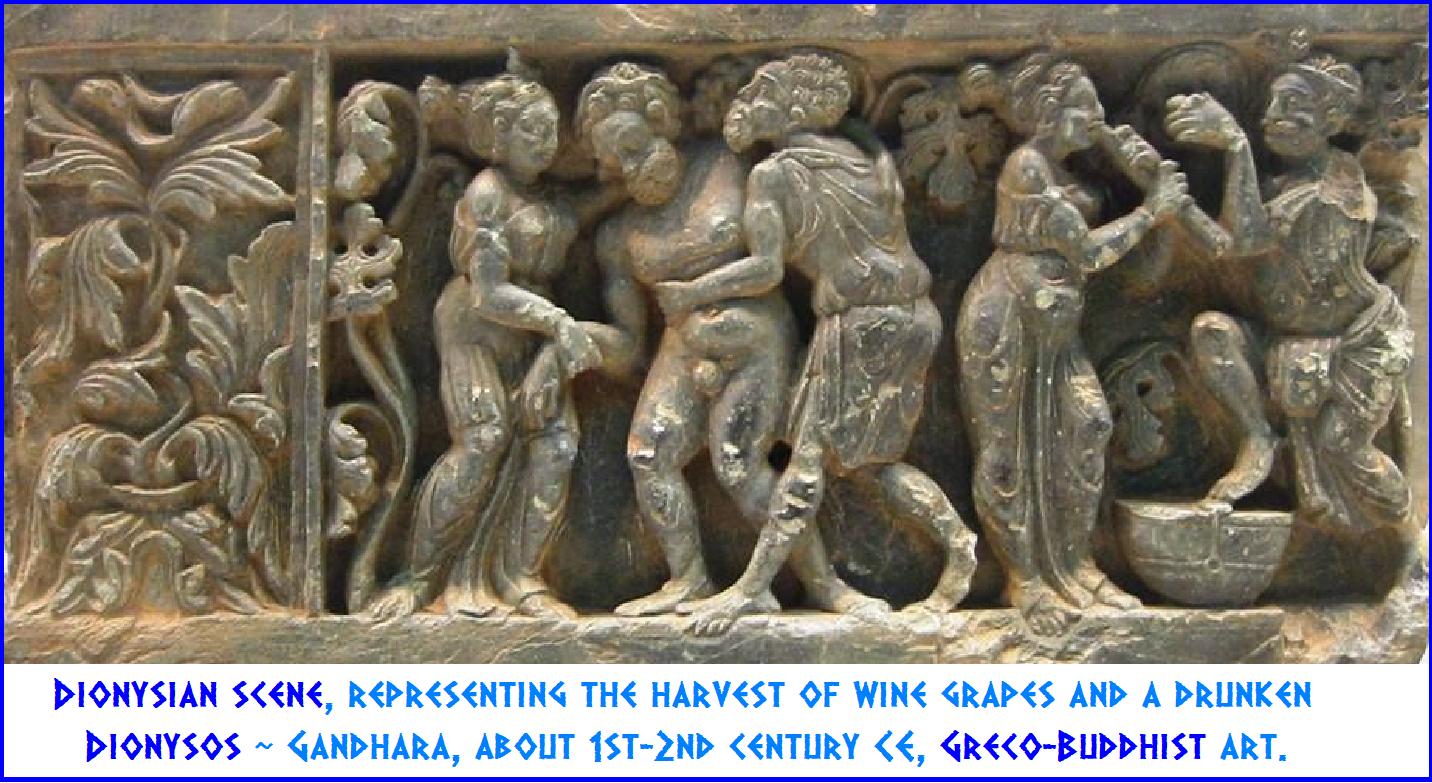
What is riveting is that the ‘Greek conquest of India’ is steeped in Greek Tradition. Ancient Greeks believed that Dionysus, the Greek God of Wine, travelled the world and taught people how to make wine. One of the most famous of His expeditions was to India, which is said to have lasted several years. In fact, this belief was so widespread that when Alexander the Great reached a settlement called Nysa on the banks of the Indus River, the locals told him that they were the descendants of the Greeks who had come with Dionysus to India!

Another myth also spoke of the conquest of India by Hercules, the son of Zeus. The 1st-century Greek historian Strabo, in his text Geographica, states, “Indians have never been engaged in foreign warfare nor have they ever been invaded or conquered by a foreign power, except by Hercules and Dionysus and lately by the Macedonians”. Perhaps it was this myth of the conquest of India that drew Alexander the Great here in the first place. We shall never know.

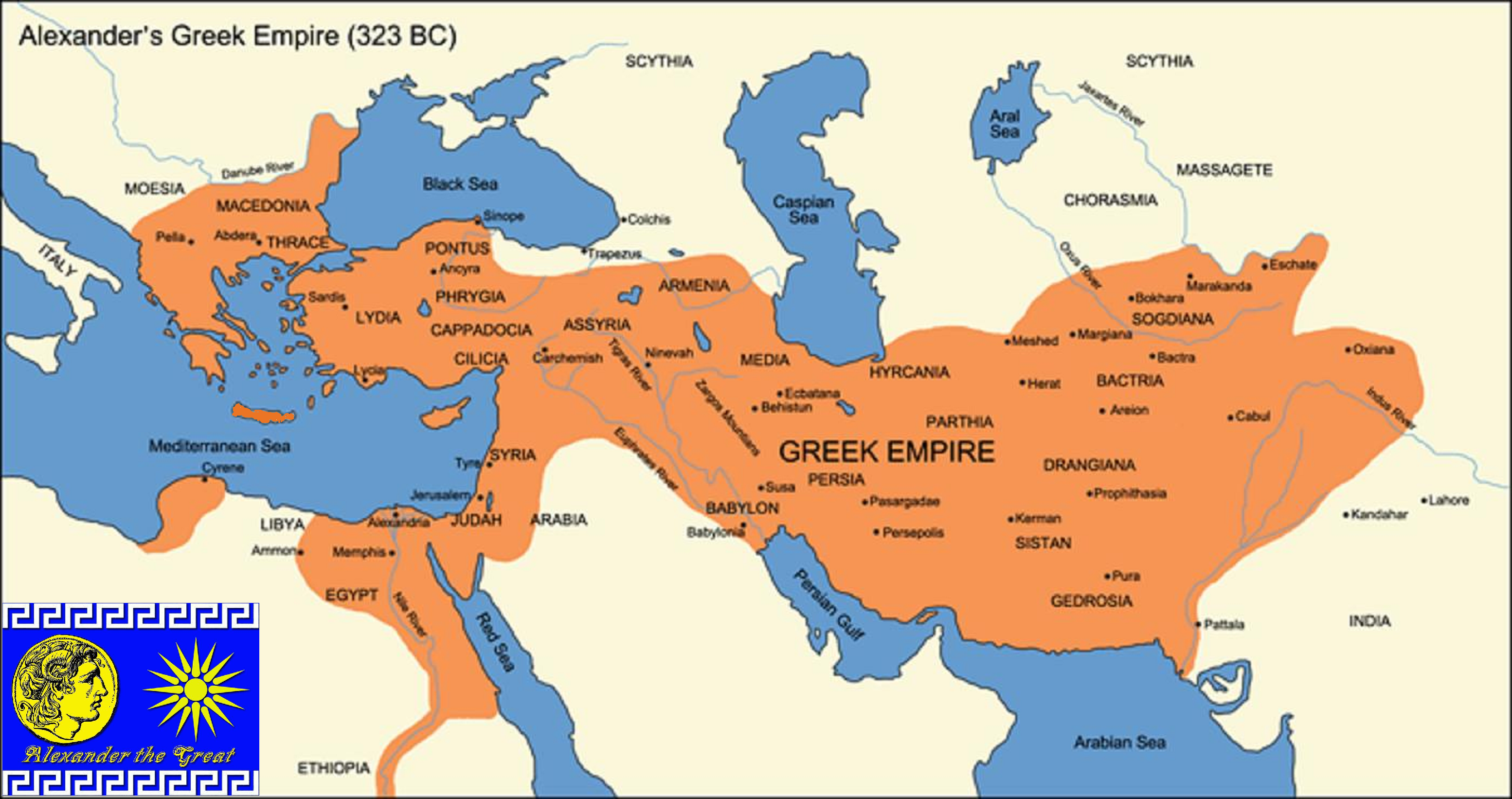
Following the death of Alexander in 323 BCE, his vast empire was split between his generals, with his possessions in India, Central Asia and Persia going to Seleucus Nikator. Between 305-302 BCE, Seleucus Nikator invaded India with a view to recapturing the Indian possessions of Alexander that had come under the control of Chandragupta Maurya.


The details of this conflict are not known but  Seleucus Nikator ceded the Hindu Kush, Punjab and parts of Afghanistan to Chandragupta Maurya. Seleucus Nikator also gave his daughter Helena in marriage to Chandragupta and appointed Megasthenes as an ambassador in the Mauryan court. Megasthenes became famous for his text Indica, which gives a fascinating account of the India he saw at the time.

Around 250 BCE, the local governor of Bactria, Diodotus declared his independence from the Seleucid Empire founded by Seleucus Nikator, and established the Greco-Bactrian Kingdom that maintained close links with the Indian subcontinent. You will not find ‘Bactria’ on modern world maps but it is the ancient name for a region that roughly corresponds with Northern Afghanistan and Tajikistan, and bound by the Hindu Kush and the Pamir mountains. The Greco-Bactrian kingdom became extremely rich and powerful due to trade and the fertile land of the Amu Darya or Oxus river basin.

The Greco-Bactrians maintained close trade and cultural ties with India, the focal point of which was the city of ‘Ai-Khanum’ (‘Lady Moon’ in Uzbek), earlier known as ‘Alexandria on Oxus’ and ‘Eucratidia’. The city was located in the present-day Takhar province of Northern Afghanistan, at the confluence of the Panj and Kokcha rivers, both tributaries of the Amu Darya, and on the route to India.

The archaeological site of Ai-Khanum was accidentally discovered by an Afghan nobleman named Khan Gholam Serwar Nasher on a hunting trip in the 1960s. While excavations by archaeologists between 1964 and 1978 revealed a magnificent city, sadly the site was extensively looted by the Taliban during the Afghan Civil War. Archaeologists had discovered a great city with a great palace, a large theatre, a gymnasium and various temples including a large temple dedicated to Zeus built in Zoroastrian style.

But it is the coins found at Ai-Khanum that are the most eye-catching. Among the numerous coins found here are those minted by King Agathocles of Bactria (r. 190-180 BCE). These coins are typical Indian-style square coins and depict Indian deities! Historians and numismatists interpret them as forms of Vishnu, Shiva, Balarama, and Lakshmi.


These are the earliest coins that depict Vedic deities. For example, there is a coin depicting Goddess Lakshmi with a Brahmi legend ‘Rajane Agathukleyasasa’ or ‘King Agathocles’. Equally interesting are the coins that depict Balarama-Shankarshana with a mace and a plough, and Vasudeva-Krishna with a shanka (conch) and a Sudarshana Chakra. In addition, there are coins depicting stupas and the Bodhi tree with a railing, which is common Buddhist imagery. This tells us how closely connected the city of Ai-Khanum was to India, culturally.

Emperor Ashoka (304 to 232 BCE) is said to have sent missionaries to the Greco-Bactrian kingdom, where they converted many people to Buddhism. In fact, some of Ashoka’s missionaries were themselves Greek-Buddhist monks.

In Mahavamsha, an epic poem in Pali on the early history of Sri Lanka, there is a reference to how Ashoka sent a ‘Yona’ (Yavana) monk named Dharmarakshita to the Aparanta country (Konkan coast) to preach Buddhism. The Ashokan edict at Kandahar in Afghanistan is written in Greek and Aramaic, which tells us about the large Greek settlement there.

Demetrius’s Onslaught


After the death of Ashoka, a series of weak rulers led to the decline of the Mauryan power. In 180 BCE, Brihadhrata Maurya was assassinated by his general Pushyamitra Shunga during a military parade. Taking advantage of the chaos that followed, Greco-Bactrian ruler, Demetrius I invaded India, sending his armies to conquer some of India’s great cities like Mathura, Saketa (Ayodhya) and Pataliputra.

 Demetrius was victorious in his campaigns,and a new era, the Era of the Greek Kingdoms, began in India. This time period is also known as The Yavana Era. With his kingdom expanding deep into India, Demetrius moved his capital to Sirkap, just opposite the river bank from the city of Taxila (near present-day Peshawar). The ruins of Sirkap show that it was built according to the ‘Hippodamian’ grid-plan characteristic of Greek cities. It was organized around one main avenue and 15 perpendicular streets.

What is fascinating is that at a stupa at Sirkap has the earliest known motif of the ‘Double Headed’ Eagle, which later spread across India as a symbol of royalty. Interestingly, it is today used by the state of Karnataka, in present-day India!

In Indian texts like the Gargi Samhita, King Demetrius is known as ‘Yavanaraja Dimita’ or ‘Dharmamita’. We know very little of Demetrius after his India conquest. 

The death of Demetrius saw the decline of the Greco-Bactrian Kingdom. The Yuezhi tribe from China (later known as Kushanas) began to invade Bactria from the north. In the 1st century BCE, King Heliocles moved his capital to the Kabul valley, from where he ruled Punjab. 

The Greek rulers who ruled from India after the fall of Bactria to the Scythians were called ‘Indo-Greeks’ to distinguish them from the ‘Bactrian Greeks’. The ‘Indo-Greek’ Kings ruled much of North India, the most prominent among them being King Menander, the General of Demetrius I, who had marched to Pataliputra. He set up his own kingdom and ruled from Sagala, modern-day Sialkot (in Pakistan’s Punjab).

The Greek geographer Strabo wrote that Menander had “conquered more tribes than Alexander the Great”. The sheer number of his coins found across India has led historians to conclude that he probably presided over a very prosperous empire. But Menander is the most well known Indo-Greek king due to a Buddhist text known as Milinda Panha.

According to Buddhist tradition, King Menander embraced Buddhism, following a religious discussion with a Buddhist monk named Nagasena. Interestingly, Nagasena was a disciple of Dharmarakshita, the ‘Yavana’ Buddhist missionary sent by Ashoka to the Konkan. King Menander had philosophical discussions with Nagasena at Sagala (Sialkot), which were compiled as Milinda Panha or ‘Questions of Milinda (Menander)’. The text gives us an interesting description of  Menander, stating:

“King of the city of Sâgala in India, Milinda by name, learned, eloquent, wise, and able; and a faithful observer, and that at the right time, of all the various acts of devotion and ceremony enjoined by his own sacred hymns concerning things past, present, and to come. Many were the arts and sciences he knew – holy tradition and secular law; the Sânkhya, Yoga, Nyâya, and Vaisheshika systems of philosophy, arithmetic, music, medicine, the four Vedas, the Purânas, and the Itihâsas, astronomy, magic, causation, and magic spells, the art of war, poetry, conveyancing in a word, the whole nineteen.”


Not just Buddhist sources but even Greek accounts such as that of 1st century CE Greek scholar Plutarch of Chaeronea praise the just rule of Menander and claim that just like Buddha, Menander’s relics too were distributed among different stupas across North-West India.

The Milinda Panha states:

“But when one Menander, who had reigned graciously over the Bactrians, died afterwards in the camp, the cities indeed by common consent celebrated his funerals; but coming to a contest about his relics, they were difficultly at last brought to this agreement, that his ashes being distributed, everyone should carry away an equal share, and they should all erect monuments to him.”

Menander’s greatest legacy was the establishment of Greco-Buddhism, which saw a revival in art that was a unique synthesis of Greek and Buddhist influences. Menander’s successors depicted themselves or their Greek deities forming with the right hand a symbolic gesture identical to the Buddhist vitarka mudra and started to adopt on their coins the Pali title of ‘Dharmikasa’, meaning ‘follower of the Dharma’. During his reign, we see friezes of Greek-looking people appearing on the stupas at Sanchi and Bharhut.

 Interesting fact In 1950, Dr Babasaheb Ambedkar started an educational college in Aurangabad, Maharashtra, which he named ‘Milind Mahavidyalaya’ after the Indo-Greek King Menander I..


Τhe cultural influence of the Yavanas or Greeks can be found across India. In the heart of India, in Besnagar near Bhopal, you will find the Heliodorus pillar. Around 115 BCE, King Antialkidas sent Heliodorus as his ambassador to the court of the Shunga king Bhagabhadra in Vidisha. A staunch devotee of Vishnu, Heliodorus built a Garuda pillar, where he described himself as a follower of the Bhagavata cult. In a number of cave complexes of Western India, such as Karla, Nashik and Manmodi, you will find references to ‘Yavana’ donors.

Perhaps the last reference to Indo-Greek rule in India is what is known as the Yavanarajya inscription, also called the Maghera Well Stone Inscription discovered in the village of Maghera, 17 km north of Mathura in 1988. The inscription mentions a donation for a water well to the community “in the year 116 of the Yavanarajya”. This roughly corresponds to 69 or 70 BCE.

Two things can be deduced from the inscription, the first being that Mathura was still under the rule of the Yavanas (Indo-Greeks) at the time and that the Indo-Greeks had their own calendar. The Yavana Era or the Yona era was earlier thought to have been started by Demetrius I .

The end of Indo-Greek administration at around 10 CE did not signify the end of the Greek influence in India. It continued through the Indo- Scythians and the Hellenistic Kingdom of the Kushans. The artistic movements of Gandhara and Seres -Serindian Art, were prevalent throughout India.But their strong cultural legacy continued for centuries. It is interesting how the ‘Yavanarajya’ continued to be a source of legitimacy for centuries. German historian Harry Falk in his paper Ancient Indian Eras: An Overview writes about how, when the Kushana king Kanishka launched his own era around 127 CE, he pegged it to precisely 300 years after the ‘Yavana Era’. Falk argues that Kanishka wanted to link his own rule with that of the Indo-Greeks, who had first linked Central Asia and India.

Edited from History of India

Wednesday, 15 November 2023

UNANI TIBB ~ ANCIENT GREEK MEDICINE IN CENTRAL ASIA


Greco-Arabic Medicine

     Unani is the Arabic word for Ionian, or Greek.  Greece's Islamic neighbors call Greece Yunanistan, or the Land of the Unanis. 

     While Western Europe was in the Dark Ages, Greek Medicine and other branches of classical science and learning found a safe haven in Islamic lands.  But Greek Medicine didn't remain static or unchanging; it continued to grow and evelve as Muslim scholars and physicians continued to make important discoveries and contributions of their own. 

     In the process, Greek Medicine was "Islamicized" into Unani-Tibb, or Greco-Arabic Medicine.  This transformation proved that Greek Medicine was flexible, resilient and adaptable enough to absorb and incorporate new developments and influences. 

     Within a few short centuries after its birth, the Islamic world had expanded to stretch from the Atlantic ocean in the west to the Indian ocean in the east, from Moorish Spain to the plains of Hindustan.  Everywhere the Muslims went, their Unani physicians went with them, adapting themselves to the local conditions and resources.  In the words of Unani medical historians, Unani Tibb enriched itself by imbibing new medicines, techniques and treatments from the various cultures and medical systems with which it came into contact, which included Indian Ayurveda and Oriental Medicine.

     Around the time of the Crusades, the Islamic world produced a few very prominent and influential physicians and medical scholars.  Their names were Latinized, and their medical treatises were imported into Europe and translated into Latin, to serve as texts and reference manuals in the medical schools that were just starting to spring up in Medieval Europe. 

     Ibn Rushd, or Averroes (1120 - 1198) was a physician and Islamic scholar and philosopher in Moorish Spain.  He wrote a five volume treatise on medicine called Al-Culliyat (The Fundamentals), or Colliget. 

     Al-Razi, or Rhazes (865 - 924) was a Persian physician, chemist and alchemist.  He wrote a vast medical encyclopedia called Continens, with many excerpts from Hindu and Greek medical sources.

However, the greatest of these was undoubtedly Hakim Ibn Sina, or Avicenna.  He wrote a five volume treatise called The Canon of Medicine, which became a standard textbook in European medical schools.  Today, it serves as the basic handbook for all practitioners of Unani Medicine.

     Unani Medicine found fertile soil in India.  The Delhi Sultanate and later the Moghul emperors were great patrons of medicine.  Many eminent physicians from Persia and Central Asia came to India not only to seek fame and fortune, but also to find a safe haven from the wars and strife devastating their homelands. 


  Under British rule, all forms of healing except conventional allopathic medicine were discouraged.  But Unani Medicine survived, due to its popularity with the masses, and the safe, gentle yet effective nature of its treatments. 

     Hakim Ajmal Khan (1864 - 1927) was an Unani physician, and also an Indian patriot and freedom fighter in the struggle for independence.  He was also a great advocate and champion of the indigenous systems of Ayurvedic and Unani Medicine, and pioneered scientific research into their treatments.

     Today, the Indian government supports and subsidizes both Ayurvedic and Unani medical colleges and hospitals.  But whereas Ayurveda has enjoyed a phenomenal surge in popularity, Unani Medicine still lags behind in recognition, perhaps due to its minority Islamic associations.

http://www.greekmedicine.net/history/Unani_Medicine.html


Sunday, 5 November 2023

ALEXANDRIA ESCHATE ~ FERGANA VALLEY ~~ TADJIKISTAN


Alexandria Eschate (Attic Greek: Ἀλεξάνδρεια Ἐσχάτη, Doric Greek: Αλεχάνδρεια Ἐσχάτα, romanized: Alexandria Eschata, "Furthest Alexandria") was a city founded by Alexander the Great, at the south-western end of the Fergana Valley (modern Tajikistan) in August 329 BCE.It was the most northerly outpost of Alexander's Empire in Central Asia. Alexandria Eschate was established on the south bank of the river Jaxartes (Syr Darya), at or close to the site of modern Khujand (Хуҷанд; خجند). According to the Roman writer Curtius, Alexandria Ultima retained its Hellenistic culture as late as 30 BCE.

History

This region where Alexandria Eschate would be founded was ruled over by Persia starting with Xerxes I, and began to be populated by Greeks starting at that time. When Greeks  in other parts of the Persian empire rebelled or otherwise were troublesome, they would be exiled to the far northeast of the Persian empire, the most distant segment from their homelands. This was not uncommon, because the coastline of Asia Minor was populated by many Greek-culture and language cities, who had colonized the region in the previous centuries. By the time of the fall of Persia to Alexander the Great, many had been exiled to this region north of India, so Greek villages, language, and culture were therefore all common in that area. Cyrus the Great founded a city there as his northeastern-most outpost, known as Cyropolis, which may have later become the site of Alexandria Eschate, simply renamed.


Alexander the Great

Alexander, during his years of conquest, would regularly establish long-term outposts to support his advance, either renaming and permanently securing an existing city, or creating a long-term, albeit non-permanent, outpost built up like a town. According to Greek historian Plutarch, Alexander named seventy of these bases after himself.

Alexandria Eschate was located in the Ferghana Valley. 

In order to secure Sogdiana, the northeastern corner of the Persian empire, Alexander targeted Cyropolis and a half dozen other cities in 329 BCE.


Alexander first sent Craterus to Cyropolis, the largest of the towns holding Sogdiana against Alexander's forces. Craterus' instructions were to "take up a position close to the town, surround it with a ditch and stockade, and then assemble such siege engines as might suit his purpose...." The idea was to keep the inhabitants focused on their own defenses and to prevent them from sending assistance out to the other towns. Starting from Gazza, Alexander went on to conquer the other surrounding towns. Five of the seven towns were taken in two days. Many of the inhabitants were killed. Alexander then arrived at Cyropolis, which was the best fortified of the towns and had the largest population. It also had reputedly the best fighters of the region. Alexander battered Cyropolis' defenses with the siege engines. While the bombardment went on, Alexander ordered certain of his troops to sneak through a dried-up water course that went under the town's wall. Alexander also joined on this mission and once inside his troops opened the town's gate to admit his attacking force. Once the natives saw that the town was taken, they fell violently upon the attackers. Alexander received a violent blow from a stone that landed upon his head and neck. Craterus was wounded by an arrow. But the defenders were driven off. Arrian puts the defender's force at about 15,000 fighting men and claims that 8,000 of them were killed in the first phase of the operation. The rest apparently sought refuge inside the town's central fortress, but surrendered after one day for lack of water.


Accounts of how the battle went down differ among authors. Arrian cites Ptolemy as saying Cyropolis surrendered from the start, and Arrian also states that according to Aristobulus the place was stormed and everyone was massacred.


One, probably Cyropolis, came to be called Alexandria Eschate, his northeastern-most outpost. As with most other cities founded by Alexander, a group of retired and/or wounded veterans from his army was settled there, joining the large population of Greek exiles settled in the area by Persia in previous generations.

Because Alexandria Eschate was surrounded by Sogdian tribes, and was about 300 km (186 mi) north of the nearest Greek settlement, at Alexandria on the Oxus in Bactria, the Greeks built a 6.0 km (3.7 mi) wall around the city which, according to the ancient authors, was completed in about 20 days.It experienced numerous conflicts with the local population.


Alexandria Eschate was located 300 km north-west of the main Greek colonies in Central Asia, at Bactria.

From 250 BCE, the city likely had greater contact with Bactria, after the Greco-Bactrian king Euthydemus I extended his control into Sogdiana.


Alexandria Eschate was also located around 400 km (249 mi) west of the Tarim Basin (now Xinjiang, China), where other Indo-European peoples, like the Khotanese, Tocharians, Wusun and/or Yuezhi were established. There are indications that Greek expeditions travelled as far as Kashgar. The historian Strabo claims that the Greeks "extended their empire even as far as the Seres and the Phryni .


"Seres" meant either China proper – in which case the Greeks achieved the first direct contact between China and a European society, some time around 200 BCE – or the peoples of the Tarim. In any case, a city known to the Chinese as Dayuan, which was mentioned by scholars from the Han dynasty (1st century BCE to 2nd century CE), is speculated to refer to Alexandria Eschate. The prefix da meant "Great", while the suffix Yuan was the Chinese rendition of Ionians.


Chinese embassies were established in Dayuan, beginning with Zhang Qian opened around 130 BCE. Soon the city and the rest of Dayuan were conquered completely by the Han after winning the War of the Heavenly Horses. This contributed to the opening up the Silk Road from the 1st century BCE. Dayuan means "Great Ionians" in the Chinese language, Greeks generally being known in Asia by some variant of "Ionians". See Names of the Greeks: Ionians, Yunani, and Yavan for more information.


Archaeological remains

The remains of Alexander's town lie in the tell of the old citadel in Khojand. Although the oldest surface remains of the walls date only to the 10th century, Soviet and Tajik excavations of the site have revealed that below the modern surface are medieval, Hellenistic and Achaemenid layers. These layers have revealed fortifications dating to around the 4th century BCE.


Other remains include household utensils, armaments and building materials which are exhibited in the Museum of Regional Studies in Khojand. The site has also revealed numerous Hellenistic coins and pottery. 

In the Tabula Peutingeriana, below the city there is a rhetorical question in Latin: "Hic Alexander responsum accepit: usque quo Alexander?" (English: Here Alexander accepted the answer: "Until where, Alexander?") — referencing both his insatiable appetite for conquest and a legend from the Alexander Romance in which "celestial creatures" admonished Alexander to not pursue further explorations, which would ultimately lead to his untimely death.


Edited from WIKIPEDIA

Saturday, 28 October 2023

STATUETTE OF HERACLES ~ AI KHANUM ~ AFGHANISTAN


Statuette of Heracles. Around 150 BCE. This beardless Heracles, crowning himself with leaves, resonates with numismatic finds of the Greco-Bactrian king, Demetrius (190-175 BCE) . The piece provides some evidence for continuity in the first half of the second century in Aï Khanoum due to the Gymnasium’s dedication to Heracles.

Tuesday, 17 October 2023

THE HONOUR OF DYING FOR YOUR COUNTRY SPARTAN WAR POETRY BY TYRTAEUS


It is a fine thing for a brave man to die when he has fallen among the front ranks while fighting for his homeland, and it is the most painful thing of all to leave one’s city and rich fields for a beggar’s life, wandering about with his dear mother and aged father, with small children and wedded wife.

 For giving way to need and hateful poverty, he will be treated with hostility by whomever he meets, he brings disgrace on his line, belies his splendid form, and every indignity and evil attend him. If then there is no regard or respect for a man wanders thus, nor yet for his family after him, let us fight with spirit for this land and let us die for our children, no longer sparing our lives.

 Come, you young men, stand fast at one another’s side and fight, and do not start shameful flight or panic, but make the spirit in your heart strong and valiant, and do not be in love of life when you are fighting men. Do not abandon and run away from elders, whose knees are no longer nimble, men revered. For this brings shame, when an older man lies fallen among the front ranks with the young behind him, his head already white and his beard grey, breathing out his valiant spirit in the dust, clutching in his hands his bloodied genitals—this is a shameful sight and brings indignation to behold—his body naked.

 But for the young everything is seemly, as long as he has the splendid prime of lovely youth; while alive, men marvel at the sight of him and women feel desire, and when he has fallen among the front ranks, he is fair. Come, let everyone stand fast, with legs set well apart and both feet fixed firmly on the ground, biting his lip with his teeth. (Translation by  Douglas E. Gerber)

Τεθνάμεναι γὰρ καλὸν ἐνὶ προμάχοισι πεσόντα

ἄνδρ’ ἀγαθὸν περὶ ᾗ πατρίδι μαρνάμενον,

τὴν δ’ αὐτοῦ προλιπόντα πόλιν καὶ πίονας ἀγροὺς

πτωχεύειν πάντων ἔστ’ ἀνιηρότατον,

πλαζόμενον σὺν μητρὶ φίλῃ καὶ πατρὶ γέροντι

παισί τε σὺν μικροῖς κουριδίῃ τ’ ἀλόχῳ.

ἐχθρὸς μὲν γὰρ τοῖσι μετέσσεται οὕς κεν ἵκηται,

χρησμοσύνῃ τ’ εἴκων καὶ στυγερῇ πενίῃ,

αἰσχύνει τε γένος, κατὰ δ’ ἀγλαὸν εἶδος ἐλέγχει,

πᾶσα δ’ ἀτιμίη καὶ κακότης ἕπεται.

εἰ δ’ οὕτως ἀνδρός τοι ἀλωμένου οὐδεμί’ ὤρη

γίνεται οὔτ’ αἰδὼς οὔτ’ ὀπίσω γένεος,

θυμῷ γῆς πέρι τῆσδε μαχώμεθα καὶ περὶ παίδων

θνήσκωμεν ψυχέων μηκέτι φειδόμενοι.

ὦ νέοι, ἀλλὰ μάχεσθε παρ’ ἀλλήλοισι μένοντες,

μηδὲ φυγῆς αἰσχρῆς ἄρχετε μηδὲ φόβου,

ἀλλὰ μέγαν ποιεῖσθε καὶ ἄλκιμον ἐν φρεσὶ θυμόν,

μηδὲ φιλοψυχεῖτ’ ἀνδράσι μαρνάμενοι·

τοὺς δὲ παλαιοτέρους, ὧν οὐκέτι γούνατ’ ἐλαφρά,

μὴ καταλείποντες φεύγετε, τοὺς γεραιούς.

αἰσχρὸν γὰρ δὴ τοῦτο, μετὰ προμάχοισι πεσόντα

κεῖσθαι πρόσθε νέων ἄνδρα παλαιότερον,

ἤδη λευκὸν ἔχοντα κάρη πολιόν τε γένειον,

θυμὸν ἀποπνείοντ’ ἄλκιμον ἐν κονίῃ,

αἱματόεντ’ αἰδοῖα φίλαις ἐν χερσὶν ἔχοντα—

αἰσχρὰ τά γ’ ὀφθαλμοῖς καὶ νεμεσητὸν ἰδεῖν—

καὶ χρόα γυμνωθέντα· νέοισι δὲ πάντ’ ἐπέοικεν,

ὄφρ’ ἐρατῆς ἥβης ἀγλαὸν ἄνθος ἔχῃ,

ἀνδράσι μὲν θηητὸς ἰδεῖν, ἐρατὸς δὲ γυναιξὶ

ζωὸς ἐών, καλὸς δ’ ἐν προμάχοισι πεσών.

ἀλλά τις εὖ διαβὰς μενέτω ποσὶν ἀμφοτέροισι

στηριχθεὶς ἐπὶ γῆς, χεῖλος ὀδοῦσι δακών.

(Tyrtaeus, fr. 10)


Tyrtaeus ( Greek: Τυρταῖος Tyrtaios; fl. mid-7th century BCE) was a Greek elegiac poet from Sparta whose works speculated to fill five books. His poetry survives from quotations and papyri, and include 250 lines or parts of lines. He wrote at a time of two crises affecting his city: a civic unrest threatening the authority of kings and elders, later recalled in a poem named Eunomia ("Law and Order"), where he reminded citizens to respect the divine and constitutional roles of kings, council, and demos; and the Second Messenian War, during which he served as a sort of "state poet", exhorting Spartans to fight to the death for their city. In the 4th century BCE, when Tyrtaeus was an established classic, his poerty was recited to the Spartan armies on campaign.  It is also known that he wrote martial songs; these were important in Spartan festivals and were done through anapaestic and iambic chants that accompanied armed dances and processions.

Thursday, 12 October 2023

WHEN THE TURKS USED A GREEK- BASED SCRIPT

Turks have changed writing systems throughout their history, such as the Arabic, the Ottoman, Latin, etc.However, it is not widely known that they also used the Bactrian alphabet, which is a Greek- based alphabet, made for Central Asia.

Following the conquest of Bactria by Alexander the Great in 323 BCE, for about two centuries Greek was the administrative language of his Hellenistic successors, that is, the Seleucid and the Greco-Bactrian kingdoms.

The Kushan Empire initially retained the Greek language for administrative purposes, and later began to use Bactrian.

The Bactrian alphabet was a lightly modified version of the Greek one, used for the  Bactrian language. It seems that this writing system was in use from about 120-900 CE.


The Bactrian alphabet was very similar to Greek, containing 22 Greek-based letters and one additional letter. It was written left to right.


The Bactrian script appears also on some  Hunnic coinage. A good example of this  is the trilingual coinage of the Turk Shahis, a dynasty of Turkic or Hunnic people that ruled in Central Asia. Two interesting drachms were issued by the rulers Vakhu Deva and Tegin Shah. The drachm of Vakhu Deva has Bactrian around the rim on both sides, with late Brahmi in the obverse fields and Pahlavi in the reverse fields. The drachm of Tegin Shah has Brahmi around the obverse rim, with Bactrian in the obverse fields and Pahlavi in the reverse fields.


Edited from Wikipedia , Aqib Jahangir
Pakistan Coins Collectors Forum


Sunday, 1 October 2023

ALEXANDRIA ARACHOSIA ~ THE MODERN KANDAHAR OF AFGHANISTAN


Alexandria in Arachosia (Greek: Ἀλεξάνδρεια Ἀραχωσίας) also known as Alexandropolis (Ἀλεξανδρόπολις), was an ancient city that is now called Kandahar in Afghanistan. It was one of more than twenty cities founded  by Alexander the Great. It was founded around 330 BCE, on the foundations of an earlier Achaemenid fortress. Arachosia is the Greek name of an ancient province of the Achaemenid, Seleucid and Parthian empires. The province of Arachosia was centered around the Argandab valley in Kandahar. It did not reach the Hindu Kush, but it apparently extended east as far as the Indus River, although its exact extents are not yet clear.

After the conquests of Alexander the Great, Arachosia was ruled by the Satrap Sybirtius. In the 3rd century BCE, it is thought that the ambassador to the Indian court Megasthenes departed from the city to visit India:


Megasthenes lived with Sibyrtius, satrap of Arachosia, and often speaks of his visiting Sandracottus, the king of the Indians. Arrian, Anabasis Alexandri.


Isidorus of Charax in his 1st century CE "Parthian stations" itinerary described an "Alexandropolis, the metropolis of Arachosia", which he said was still Greek even at such a late time:


Beyond is Arachosia. And the Parthians call this White India; there are the city of Biyt and the city of Pharsana and the city of Chorochoad and the city of Demetrias; then Alexandropolis, the metropolis of Arachosia; it is Greek, and by it flows the river Arachotus. As far as this place the land is under the rule of the Parthians.

The remains of Alexandria in Arachosia are today found in the tell of Old Kandahar citadel in the western portion of the modern city. The citadel tell was excavated by the British Society for South Asian Studies through the 1970s and with the relative improvement in security from 2008 to 2009.


These excavations indicate that the Islamic walls were based on those from classical times, indicating what might be a square (tetragonis) shaped town, but one highly modified by the unusual topography. A triangular-shaped portion of the tell adjoining the Greek town is from the Buddhist era.


Alexander appears to have founded his town on the site of a 6th-century BCE Persian garrison point. The pass, river and junction of three long-distance trade routes made the location of strategic importance. To date, no Greek buildings have been found, but numerous coins, inscriptions and graves have been discovered. Further discoveries are anticipated as excavation reaches deeper strata of the tell.


The citadel walls have been shown to have contained circular towers similar to those at Farah, Balkh and Nadi Ali Sorkh Gdagh, although these could be Islamic in age.

 Edited from WIKIPEDIA

Thursday, 28 September 2023

IMAGES OF THE GREEK GODS IN THE KOREAN LANGUAGE

 A series of images of the Greek Gods in the Korean language for our Korean speaking readers. If you wish to download the pictures, right click on each image.